Program Overview
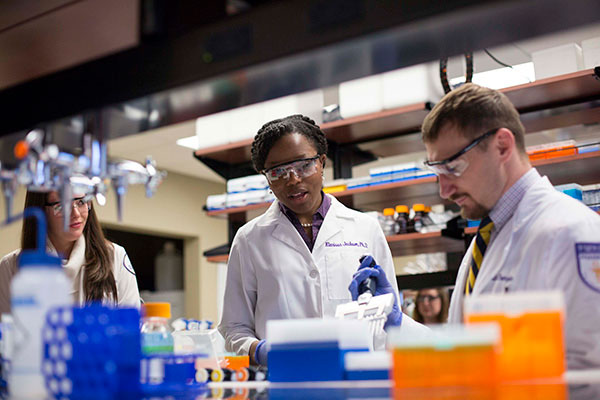
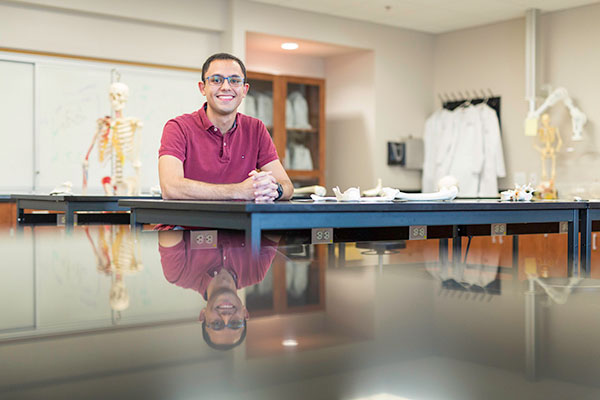
With a robust healthcare ecosystem and growing medical education contingency, there is no better place to reach your potential as a physician assistant than in Nashville, the healthcare industry capital of the U.S. Let us help you prepare for your future career as a PA through excellence in education, meaningful engagement, and the empowerment of students. With small class sizes, veteran faculty, and state-of-the-art facilities, the School of Physician Assistant Studies offers a top-tier education aimed at impacting healthcare, one student at a time.
At Lipscomb University, Christian faith is foundational, infused in both the curriculum and the campus community. Our PA program will serve your spiritual and vocational goals, as you train to serve others.
On your way to becoming a PA, our dedicated faculty and staff will mentor and guide you through every step of the process, remaining invested in your success. Once you graduate, you will become peers and colleagues in one of the fastest-growing and most rewarding health professions in the United States.
Your journey starts now… at the Lipscomb University School of Physician Assistant Studies.
Core Competencies for Graduates
Competencies, which are summative in nature, encapsulate the knowledge, skills, and attitudes required for entry into clinical Physician Assistant practice. As such, the Lipscomb University School of Physician Assistant Studies has defined the core competencies expected of its graduates. Not only do the competencies culminate the program’s expectations of the student, but they also serve as a framework to underpin the curriculum and establish a robust foundation on which graduates can build a future career.
Medical Knowledge (MK)
Medical knowledge must be focused on core evidence-based knowledge for practice. Physician assistants must demonstrate the acquisition of established knowledge in the scientific, biomedical, and clinical sciences, as well as its application to patient care in clinical practice. Moreover, graduate PAs should incorporate epidemiological and social/behavioral approaches across patients and populations, while demonstrating a propensity for lifelong learning and the critical appraisal of evolving medical knowledge. Upon graduation, the PA student will be able to:
- Demonstrate knowledge of scientific principles and application to patient care.
- Demonstrate biomedical knowledge regarding the recognition, treatment, and prevention of disease.
- Demonstrate knowledge and application of clinical sciences to patient care.
- Apply evidence-based and epidemiological approaches to patient care for patients and populations.
- Apply principles of social-behavioral sciences by assessing the impact of psychosocial and cultural influences on health, disease, care-seeking, and adherence.
Interpersonal Skills (IS)
In healthcare, physician assistants must demonstrate the interpersonal skills necessary for effective interaction with patients, families, collaborating physicians, and other health professionals. As such, these skills are considered an inherent component of healthcare delivery, enabling effective communication and information exchange. Interpersonal skills informed by a Christian worldview will foster altruism and service, fulfilling the calling of a physician assistant. Upon graduation, the PA student will be able to:
- Create and maintain therapeutic relationships with patients, family members, and caregivers while demonstrating sensitivity and responsiveness to a diverse patient population, including, but not limited to, diversity in gender, age, culture, race, religion, disabilities, and sexual orientation.
- Create a collegial partnership with other members of the healthcare team in order to provide patient-centered care.
- Adapt communication skills to the interaction's context to enable effective information exchange.
Clinical & Technical Skills (CTS)
Patient-centered care requires patient- and setting-specific clinical and technical skills to assess, evaluate, and manage patients presenting with a wide range of diseases. Similarly, these skills are required to promote health in patients and populations. Upon graduation, the PA student will be able to:
- Obtain essential and accurate histories and perform an appropriate physical exam for ages across the lifespan, regardless of presentation.
- Order and interpret appropriate diagnostic studies.
- Develop a differential diagnosis and select the most appropriate working diagnosis.
- Perform medical, diagnostic, and surgical procedures considered essential for entry-level PA practice.
- Develop and implement therapeutic plans and interventions.
- Provide culturally sensitive, contextually relevant counseling.
- Accurately and adequately provide comprehensive documentation regarding care for medical, legal, quality, and financial purposes in a timely manner.
- Provide concise oral case presentations tailored to the audience and the presentation's context.
Clinical Reasoning & Problem-Solving Skills (CRPS)
The practice of patient-centered healthcare requires the persistent use of sound clinical reasoning and problem-solving skills to analyze information and synthesize treatment plans. Additionally, these skills must be developed and maintained in order to triage and provide appropriate care. Upon graduation, the PA student will be able to:
- Demonstrate an investigative and analytical approach to clinical situations.
- Recognize normal and abnormal health states in symptomatic and asymptomatic individuals.
- Discern between acute, chronic, and emergent disease states.
- Prioritize therapeutic actions and clinical care decisions based on available data.
Professional Behaviors (PB)
Physician assistants must demonstrate strict adherence to professional responsibilities, remaining accountable to our colleagues, the public, and the patients and populations we serve. Physician assistants must demonstrate a high level of trust, ethical practice, and commitment to the profession's standards. Upon graduation, the PA student will be able to:
- Appraise the physician assistant's role in healthcare delivery within the contexts of the physician/PA relationship and the interprofessional team.
- Differentiate the functions of the various members of the interprofessional health care team to promote a climate of mutual respect and trust.
- Demonstrate self-awareness in recognition of personal/professional limitations.
- Maintain loyalty to ethical principles of practice.
- Adhere to standards of care and to relevant laws, policies, and regulations that govern the delivery of care.
- Engage in systems-based practice through coordination of care, while maintaining cost awareness, risk/benefit analysis, and advocacy efforts.
- Use critical analysis of practice patterns to improve patient care and outcomes, while identifying ways to improve efficiency and reduce medical error.
Accreditation Information
The Accreditation Review Commission on Education for the Physician Assistant, Inc. (ARC-PA) has granted Accreditation-Continued status to the Lipscomb University School of Physician Assistant Studies Program sponsored by Lipscomb University. Accreditation-Continued is an accreditation status granted when a currently accredited program is in compliance with the ARC-PA Standards.
Accreditation remains in effect until the program closes or withdraws from the accreditation process or until accreditation is withdrawn for failure to comply with the Standards. The approximate date for the next validation review of the program by the ARC-PA will be March 2033. The review date is contingent upon continued compliance with the Accreditation Standards and ARC-PA policy.
The program's accreditation history can be viewed on the ARC-PA website at https://www.arc-pa.org/accreditation-history-lipscomb-university/.
Mission, Vision, and Goals
Mission
To be the spark that ignites Christ-centered medical practice through excellence in education, meaningful engagement, and the empowerment of students.
Vision
To be a top-tier program, impacting healthcare one student at a time.
Goals
1. To achieve on-time graduation rates on par with the national average.
Metrics:
- On-time graduation rate.
Benchmarks:
- On-time graduation rate at or above the mean on-time graduation rate published in PAEA’s annual Program Report. Program Report 36 reports a mean on-time graduation rate of 94.2%.
Success:
- Class of 2021: 93% (40 of 43 students) graduated on time.
- Class of 2022: 92% (46 of 50 students) graduated on time.
- Class of 2023: 86% (43 of 50 students) graduated on time.
- Class of 2024: 94% (47 of 50 students) graduated on time.
- Class of 2025: 90% (45 of 50 students) graduated on time.
2. To achieve a high rate of student academic persistence among newly matriculated students through their tenure.
Metrics:
- Academic Persistence Rate (defined as the percentage of newly matriculated students in each cohort who navigate the curriculum without experiencing a primary academic-related program departure).
Benchmarks:
- Academic Persistence Rate at or above 92% for each matriculated cohort.
Success:
- Class of 2021: 97.7% (40 of 43 students)
- Class of 2022: 92% (46 of 50 students)
- Class of 2023: 94% (47 of 50 students)
- Class of 2024: 98% (49 of 50 students)
- Class of 2025: 94% (47 of 50 students)
3. To prepare graduates to practice in a variety of health care settings, including medically underserved areas or populations.
Metrics:
- Percentage of students completing a supervised clinical practice experience (SCPE) in a Health Professional Shortage Area as designated by the Health Resources and Services Administration of the government of the United States of America.
Benchmarks:
- 75% of students will complete a supervised clinical practice experience in a Health Professional Shortage Area.
Success:
- Class of 2021: 100% of students
- Class of 2022: 100% of students
- Class of 2023: 100% of students
- Class of 2024: 100% of students
- Class of 2025: 100% of students
4. To achieve a first-time PANCE pass rate at or above the national average
Metrics:
- First-time PANCE pass rate
Benchmarks:
- First-time PANCE pass rate as published annually.
Success:
- Class of 2021: 95% (93% national first-time pass rate)
- Class of 2022: 98% (92% national first-time pass rate)
- Class of 2023: 98% (92% national first-time pass rate)
- Class of 2024: 94% (92% national first-time pass rate)
- Class of 2025: 98% (91% national first-time pass rate)
Program Policies
The School of Physician Assistant Studies endeavors to define, publish, make readily available, and consistently apply policies and procedures applicable to the program. As such, the program has published for prospective and enrolled students the following index of selected policies in accordance with the Accreditation Review Commission on Education of the Physician Assistant (ARC-PA) standards, which are indexed below.
For Prospective Students
A3.08: Student Solicitation of Clinical Sites or Preceptors
Please refer to the Student Solicitation of Clinical Sites and Preceptors section of the student handbook for additional information.
A3.09a: Immunizations and Health Screenings
Please refer to the Immunizations and Health Screenings section of the student handbook for additional information.
A3.09b: International Travel
Please refer to the International Travel: Immunizations and Screenings section of the student handbook for additional information.
A3.11a: ARC-PA Accreditation Status
Please refer to the Program Overview → Accreditation Information section of this website.
A3.11b: Evidence in Effectiveness in Meeting Goals
Please refer to the Program Overview → Mission, Vision, & Goals section of this website.
A3.11c: Current Annual PANCE Report Provided by NCCPA
Please refer to the Program Overview → NCCPA PANCE Pass Rate Summary Report section of this website.
A3.11d: Required Curricular Components
Please refer to the Courses section of this website.
A3.11e: Academic Credit Offered by Program
Please refer to the Program Overview section of this website.
A3.11f: Estimates of the Total Cost of Enrollment
Please refer to the Tuition & Aid section of this website.
A3.11g: Program-Defined Competencies
Please refer to the Program Overview → Core Competencies for New Graduates section of this website.
A3.11h: Services Related to a Distant Campus
The School of Physician Assistant Studies does not have a distant campus associated with the program.
A3.11i: Current Annual Student Graduation Rate Information
Please refer to the Program Overview → Student Attrition section of this website.
A3.12a: Admission & Enrollment Practices (Favored or Preferred Characteristics, Individuals, or Groups)
Please refer to the Admissions Requirements → Holistic Application Review section of this website.
A3.12b: Admissions Requirements (Prior Education)
Please refer to the Admissions Requirements → Education & Academic Standards section of this website.
A3.12c: Practices for Advanced Placement
Please refer to the Advanced Placement section of the student handbook for additional information.
The School of Physician Assistant Studies will accept Advanced Placement (AP) and College-Level Examination Program (CLEP) scores for the psychology prerequisite, as long as they are verifiable on an official transcript. Please refer to the Admissions Requirements → Education & Academic Standards section of this website.
A3.12d: Admissions Requirements (Work Experience)
Please refer to the Admissions Requirements → Experience section of this website.
A3.12e: Technical Standards
Please refer to the Admissions Requirements → Technical Standards section of this website.
A3.13: Fair Practices and Admissions
Please refer to the Admissions Requirements → Holistic Application Review section of this website.
A3.14a: Academic Standards and Progression
Please refer to the Academic Standards and Progression Requirements sections of the student handbook for additional information.
A3.14b: Program Completion
Please refer to the Progression Requirements section of the student handbook for additional information.
A3.14c: Remediation
Please refer to the Remediation section of the student handbook for additional information.
A3.14d: Deceleration
Please refer to the Deceleration section of the student handbook for additional information.
A3.14e: Withdrawal
Please refer to the Withdrawal section of the student handbook for additional information.
A3.14f: Dismissal
Please refer to the Dismissal section of the student handbook for additional information.
A3.14g: Student Grievances
Please refer to the Student Grievance and Complaint Process section of the graduate catalog or the College of Health Sciences Grievances and Appeals section of the student handbook for additional information.
A3.14h: Student Appeals
Please refer to the Student Grievance and Complaint Process section (subsection Grade Appeals) of the graduate catalog or the College of Health Sciences Grievances and Appeals section of the student handbook for additional information.
A3.14i: Student Employment While in the Program
Please refer to the Student Employment section of the student handbook for additional information.
A3.14j: Student Travel to Required Rotation Sites
Please refer to the Student Travel to Required Rotation Sites section of the student handbook for additional information.
For Enrolled Students
Policies for enrolled students are published and indexed in the Lipscomb University School of Physician Assistant Studies Student Handbook.
Simulation Education
Take a virtual tour. The Simulation Laboratory is providing students an excellent bridge between classroom learning and real-life clinical experience.
Information Accuracy and Transparency
The Lipscomb University School of Physician Assistant Studies is committed to maintaining the highest standards of accuracy and transparency in all marketing communications and advertisements. This standard ensures that prospective students, current students, and the public receive accurate, current, and consistent information about the program across all communication channels.
Website
The program recognizes that its website serves as the primary source of information for prospective students and must therefore reflect the most current and accurate representation of the program. To maintain this standard, the program website undergoes annual reviews for accuracy and currency of all content, including curriculum details, faculty information, admission requirements, outcomes data, and program standards. When substantive program changes occur, website updates are completed within thirty days to ensure information remains current. The Program Director, or a designated faculty member, maintains oversight responsibility for all website content and must approve any changes before publication.
Advertisements & Marketing
All program advertisements and marketing materials, whether distributed through print media, digital platforms, social media, or other communication channels, must maintain consistency with the official website information and program documentation. These materials accurately represent program outcomes, accreditation status, admission requirements, curriculum structure, and other requirements without misleading, exaggerated, or unsubstantiated claims about program benefits, job placement rates, or student outcomes.
The program maintains a commitment to transparency in all communications. Marketing materials clearly identify the program's current accreditation status and any applicable limitations when applicable. When outcome data is presented in advertisements, it is current, verifiable, and presented within appropriate context to avoid misrepresentation. Should program changes occur that affect previously published advertisements, the program promptly communicates these changes to stakeholders and ensures corrections appear in all future materials.
To ensure ongoing compliance with this standard, the program has established a systematic review and update process. All marketing materials undergo review for accuracy and consistency with the program website, the primary source of program information. In the event that substantive changes occur, emergency updates to advertisements are completed within fifteen days when material changes occur. All marketing material must be reviewed by the program director or designee prior to publication.
Compliance Review
The program maintains comprehensive documentation to support accountability and verification of compliance with this standard. Student feedback regarding the accuracy of program advertisements is systematically collected during orientation sessions and exit interviews, providing valuable insight into the alignment between marketed expectations and actual program experiences. Any identified discrepancies between advertisements and the actual program experience are promptly documented and addressed through appropriate corrective measures.
This standard undergoes annual review and is updated as necessary to ensure continued compliance with accreditation requirements and alignment with institutional policies and procedures.
Admissions Requirements
The School of Physician Assistant Studies at Lipscomb University is dedicated to fostering excellence in healthcare education and preparing compassionate, skilled practitioners for the dynamic field of medicine. Our program seeks to attract motivated individuals committed to making a difference in patient care. Before embarking on this rewarding journey, prospective students should familiarize themselves with our admission requirements to ensure a smooth application process. Whether you're a recent graduate, a career changer, or a seasoned healthcare professional looking to advance your career, our comprehensive admissions criteria provide a pathway for applicants to join our esteemed community. Explore the following requirements to learn how you can begin your transformative educational experience with us.
The admission requirements below apply to the 2026-2027 admissions cycle.
Requirements Overview
Education & Academic Standards
Degree Requirement
Applicants must earn the following degree prior to matriculation into the program:
- Bachelor's Degree
Academic Standards for Degree
The following academic standards apply to the degree requirement:
- The bachelor's degree must be from a regionally accredited U.S. institution or the international equivalent, as verified by World Education Services (WES).*
- The bachelor's degree must be completed by the end of the spring semester preceding the anticipated fall matriculation date.
*For more information about international admission requirements, please refer to the International Students section below.
GPA Requirements
The program strictly adheres to a standardized approach to evaluating applicants' academic qualifications to ensure consistency and fairness in the admissions process. As such, we utilize the grade point averages (GPA) calculated by the Centralized Application Service for Physician Assistants (CASPA) at the time of application submission.
By relying on CASPA-calculated GPAs, we maintain a uniform and reliable method for assessing academic performance across all applicants. This approach helps mitigate discrepancies that may arise from variations in GPA calculations among different educational institutions or systems.
The program does not replace grades or recalculate GPAs based on coursework completed after application submission.
Academic Standards for GPA
Students must meet the following GPA minimum requirements to be considered for admission:
- CASPA-calculated minimum cumulative GPA: 3.0
- CASPA-calculated minimum overall science GPA: 3.2
Prerequisite Requirements
In addition to the requirements noted above, all applicants must complete the following prerequisite courses:
Human Anatomy & Physiology I and II – 8 credits minimum
- Two-course sequence with laboratory experience. A 4-credit Human Anatomy course with a lab, or a 4-credit Human Physiology course with a lab, could also fulfill this prerequisite.
Biology for science majors – 8 credits minimum
- Biology coursework (examples may include Biology I, genetics, cell, virology, immunology, molecular, etc.) with associated laboratory experience. Introduction and survey-type courses will not satisfy this requirement.
Microbiology – 3 credits minimum.
- Microbiology coursework with associated lab work (if applicable).
General Chemistry I - 4 credits minimum.
- General Chemistry I with associated laboratory experience. Introduction and survey-type courses will not satisfy this requirement. Organic Chemistry I or any other upper-level chemistry may be mapped to this requirement.
General Chemistry II - 4 credits minimum.
- General Chemistry II with associated laboratory experience. Introduction and survey-type courses will not satisfy this requirement. Organic Chemistry II or any other upper-level chemistry may be mapped to this requirement.
Psychology – 3 credits minimum.
- General Psychology, Abnormal Psychology, or Developmental Psychology could fulfill this prerequisite. Advanced Placement (AP) or CLEP credit will also be accepted.
Statistics – 3 credits minimum.
- General statistics or biostatistics could fulfill this prerequisite. No Calculus or other math coursework fulfills this requirement.
Academic Standards for Prerequisite Coursework
Qualifying prerequisite coursework must meet the standards below to be considered acceptable:
- Institution: All prerequisite coursework must be completed through a regionally accredited U.S. Institution.
- Course Expiration: All prerequisites must have been successfully completed within ten (10) calendar years of the planned year of matriculation into PA school. For example, an applicant who expects to enroll in Fall 2027 must have completed all prerequisites no earlier than 2017.
- Course Completion: All prerequisite courses must be completed by the end of the spring semester preceding the anticipated fall matriculation date.
- Course Grade: Students must have earned a "C" or better grade on all prerequisite coursework.
- Prerequisites Still Outstanding: To be considered for admission, students must have no more than two (2) prerequisites outstanding at the time of application submission.
Experience
Required Experiences
Applicants to our program must demonstrate a breadth of experience that aligns with and reflects the demands and expectations of the profession. The program values diverse experiences that showcase a candidate's commitment, adaptability, and understanding of the healthcare landscape. Accordingly, the program requires both patient care and PA shadowing experience for consideration of admission.
Patient Care Experience
Lipscomb requires all applicants to document patient care experience at the time of application submission. However, we do not require a specific number of hours to be considered as an applicant. Patient care hours may be paid or volunteer. It is imperative to provide a detailed description of your experiences on your CASPA application to ensure that you are given appropriate credit. Updates to patient care experiences or hours will not be accepted after application submission.
PA Shadowing Experience
PA shadowing experience is also a mandatory requirement that must be documented at the time of application submission. However, there is no minimum number of hours required for application processing. We urge students to engage in high-quality interactions with practicing PAs to develop a holistic understanding of the roles and responsibilities of a future physician assistant.
Virtual PA shadowing experiences are not accepted. To count toward this requirement, all PA shadowing must be conducted in person.
Encouraged Experiences
Prospective applicants are encouraged to gain volunteer experience to make themselves more well-rounded. While not mandatory, such experiences are valued as part of the holistic selection process.
Volunteer Experience
Volunteer experience and community service reflect a candidate's dedication to serving others and commitment to improving their community. Beyond aligning with the ethos of our program, volunteer experiences offer aspiring PAs the opportunity to engage with diverse populations, cultivate empathy, and gain invaluable insight into diverse populations. Whether volunteering for an organization, serving your community, or participating in mission trips, these experiences offer fundamental insight into the human condition while fostering compassion and humility. When detailing volunteer experiences in the CASPA application, students are encouraged to provide a comprehensive description, highlighting the specific duties performed, the impact made, and the lessons learned from each endeavor. By showcasing such altruistic endeavors and the meaningful connections forged through volunteerism, applicants can effectively demonstrate their readiness and passion for the PA profession.
Teaching Experience
Beyond traditional volunteerism, we highly value applicants who have engaged in academic transmission through teaching and tutoring. Whether serving as a university STEM TA, a professional educator, or a clinical trainer responsible for onboarding new healthcare staff, these roles demonstrate a high level of cognitive discipline and leadership. Structured peer education, such as serving as a Supplemental Instruction (SI) Leader or a professional test-prep tutor, similarly highlights an applicant’s "mastery of content" and their ability to bridge the gap between information and understanding. Even informal roles, such as camp counselors or fitness instructors, contribute to a well-rounded profile by showcasing foundational communication skills. We encourage applicants to detail these instructional roles in their CASPA application, emphasizing the duration of their commitment and the depth of the subject matter taught, as these experiences are strong indicators of academic readiness and professional maturity.
Letters of Recommendation
The School of Physician Assistant Studies requires a minimum of three (3) letters of recommendation for admission consideration. These letters serve as vital endorsements of an applicant's character, academic prowess, and suitability for the rigorous demands of the program. By requiring at least three distinct perspectives, the school ensures a comprehensive evaluation of each candidate's qualifications and potential. Through these letters, applicants can demonstrate professional aptitude, strong interpersonal skills, and a commitment to healthcare, thereby presenting a holistic picture of their candidacy to the admissions committee.
Technical Standards
Professional healthcare providers are challenged in environments that demand specific abilities, behaviors, and skills. The Lipscomb University School of Physician Assistant Studies has identified certain professional behaviors, abilities, and skills that are essential for students to succeed in the program and provide excellent patient care. For a student to be eligible to enroll in the program, he or she must be able to perform these skills and behaviors successfully, either unassisted, with dependable use of reasonable assistive devices, or by employing another reasonable accommodation. The following descriptions define the capabilities expected from an individual to successfully complete the Lipscomb University Physician Assistant Program.
Minimum Performance
The PA student must possess skills related to critical thinking, communication, gross motor dexterity, fine motor coordination, interpersonal skills, observational abilities, and social skills in an individual, group, classroom, laboratory, or other educational setting. All students must be able to effectively perform and function in solitary, small-group, large-group, social, public space, and large classroom settings without disrupting other students, patients, faculty, or staff. All students must be able to function and remain calm within stressful situations. All students must be able to attend classes and laboratory sessions and be present for examinations and testing. All students must be able to perform an overnight call when required on supervised clinical rotations.
Communication Skills
The PA student must be able to effectively hear, understand, speak, and observe patients to elicit history and other necessary information from patients, students, faculty, and staff. The student must be able to perceive nonverbal communication and cues, describe the patient's mood or changes, describe the patient's posture and appearance, and interpret and describe the patient's activity and behavior. The PA student must be able to communicate in verbal, written, typed, and electronic formats in a manner that is effective, efficient, and sensitive, in English. The PA student must be able to communicate effectively with others in a professional manner. The PA student must be able to interact with, communicate with, and understand other students, clinicians, faculty, patients, and their families to respond appropriately and in a timely fashion.
Intellectual Capabilities
The PA student must possess and demonstrate the physical, emotional, intellectual, compassionate, and ethical capabilities required to complete the full curriculum at a normal pace and on time. The student must be able to learn, retain, and recall information and make reasoned decisions in a timely fashion. The student must be able to achieve a competent level of critical thinking and reasoning required to function in an entry-level PA position. To achieve this level, the student must be able to perform in areas of reasoning, measurement, analysis, interpretation, synthesis, calculation, and deduction. These skills must be evident in dealing with other students, faculty, staff, patients, patient families, and other healthcare professionals. Critical thinking and problem-solving in stressful situations are necessary to complete the program.
Interpersonal Abilities and Social Interactions
The PA student must be able to establish and maintain appropriate professional relationships with other students, faculty, staff, health care professionals, patients, and patient families. This encompasses possessing the maturity and emotional health necessary to function within the health care and educational environments while fully utilizing his or her abilities, intellectual function, sound judgment, sensory input, critical thinking, and promptness. The student must be able to demonstrate compassion, empathy, responsibility, and tolerance towards patients, families, faculty, staff, other students, and colleagues. This includes the ability to remain calm and function at this level in stressful situations and amid competing demands on the student's time and energy.
Fine and Gross Motor Skills and Strength
In educational environments and in healthcare clinical practice, interacting with patients requires strength, coordination, and endurance. The PA student must have sufficient fine and gross motor coordination to function within the patient care and educational environments, which may include clutter, equipment, tables, family members, stairs, textbooks, supplies, and distractions. This includes the ability to ambulate, stand for extended periods, concentrate, balance, interact, assist with movement, use medical instruments, use electronic devices, position patients, and lift heavy objects. In general, a PA student should be able to safely lift 50+ pounds without any assistance or injury. Interaction within the environment may include classrooms, treatment rooms, laboratory spaces, patient rooms, waiting rooms, operating rooms, public spaces, stairwells, outdoors, and any other space generally necessary for interacting with and treating patients or for educational activities. This interaction may require standing or sitting for extended periods of time without disruption or change in position. This interaction may require altering lighting, including bright, fluorescent, or low-light conditions. All students must be able to travel to clinical rotation sites.
Observational Skills
The PA student must be able to accurately observe a patient or a simulated patient from varying distances. This includes adequate vision. The PA student must possess sufficient visual, auditory, tactile, and olfactory senses to receive sensory input in the classroom, clinical, laboratory, or educational setting. These skills include the ability to inspect, palpate, percuss, and auscultate accurately during the physical examination.
International Students & Residency Requirements
To apply to the Lipscomb University School of Physician Assistant Studies, applicants must be either:
- U.S. citizens, or
- U.S. permanent residents.
Graduates of foreign institutions must have a degree equivalent to a U.S. bachelor’s degree, as verified by the World Education Services (WES). Contact information for WES can be found at www.wes.org. Transcripts must be provided in the original language and with an English translation. Since CASPA-calculated GPAs are not available for international degree equivalents, the program will use the WES-calculated cumulative GPA and require a minimum of 3.0. In addition, all prerequisite classes must be completed at a regionally accredited postsecondary U.S. institution. The Physician Assistant Program requires a course-by-course evaluation, including verification of the lab components of the courses, as part of the CASPA application. Applications will not be considered for admission until the WES report is received.
English as a Second Language
TOEFL Requirement
Applicants who speak English as a second language must present the Test of English as a Foreign Language (TOEFL) results when applying to the program. Applicants can submit scores to the university using Lipscomb's TOEFL code (1161). For more information, please visit www.toefl.org.
Minimum TOEFL iBT score of 80 with a minimum score of 20 in each test section.
TOEFL Exemption
Individuals who learned English as a primary language before age five are exempt from submitting TOEFL scores. This exemption recognizes that early exposure to English typically leads to high proficiency. Such individuals usually demonstrate sufficient English language skills without the need for additional testing. Therefore, the program may waive the TOEFL requirement for these applicants.
To be considered for a TOEFL Exemption, please answer the custom questions in your CASPA application. Our admissions team will review your responses to determine if you qualify for an exemption.
Admission Process
Application Cycle
Our program uses a rolling admissions process and strongly encourages applicants to apply for the Fall 2027 cohort as early as possible. The 2026-2027 CASPA cycle opens on April 30, 2026, and closes at 11:59 PM Eastern Time on December 1, 2026. To be considered, all applications must be verified by CASPA and received by the program prior to the December 1, 2026, closure deadline. Applications that remain unverified by CASPA and have not yet been received by our program by the aforementioned deadline will not be considered.
Supplemental Application Fee
Please note that a nonrefundable supplemental application fee of $75 is required for all program applicants. We encourage applicants to review all program requirements and ensure their applications are complete before submission.
Once the program receives your verified application from CASPA, you will receive a confirmation email with a direct payment link and additional directions to pay your supplemental application fee. Your application will not be considered complete until the supplemental payment is received and processed.
Holistic Applicant Review
The Admissions Committee takes a broad range of factors into consideration as we select candidates, including:
- Capacity for academic success*
- Patient care experience*
- Superior interpersonal skills*
- An understanding of the PA profession with PA shadowing experience*
- PA shadowing experience
- Letters of recommendation (3 required)
- Written expression of personal thought and technical proficiency in writing
*Applicants who exceed the minimum requirements for specific admission criteria will receive incremental weighting during the applicant review process.
The Lipscomb University School of Physician Assistant Studies endeavors to recruit and retain a diverse community of physician assistant students whose qualifications align with the program's mission and goals. As such, the program has admissions and enrollment practices that advantage specific individuals or groups. Applicants demonstrating any of the following attributes will be advantaged within various sections of the admissions rubric:
- Applicants who are multilingual (advanced or fluent)
- Applicants with socioeconomic indicators*
- Applicants who have military service with an honorable discharge
- Applicants with teaching experience*
- Applicants with extracurricular activities*
- Applicants who have evidence of service (volunteer/community service) *
- Lipscomb degree-seeking students, alumni, and those with strong connections to the university
*Certain advantages will receive additional incremental weighting.
Fair Practice and Admissions
Our program maintains a fair and transparent admission process designed to identify students who will thrive in our academic environment. We evaluate each application holistically, considering academic performance, relevant experience, personal statements, recommendations, and other program-specific requirements, through a standardized review process conducted by trained faculty and staff. All admission criteria, procedures, and timelines are clearly published on our website and in program materials, ensuring prospective students understand exactly what we're looking for and how decisions are made. We are committed to the consistent application of our published standards, maintaining detailed documentation of all admission decisions, providing equal opportunity to all qualified candidates regardless of background, and communicating clearly with applicants throughout the process about their status and next steps.
L-PASS Pathway
Lipscomb Preferred Alumni and Student Selection (L-PASS) Pathway
The Lipscomb Preferred Alumni and Student Selection (L-PASS) Pathway offers a unique opportunity for dedicated Lipscomb students and alumni to gain admission to the highly regarded School of Physician Assistant Studies. This program is designed to recognize and support our hard-working students by providing an additional admissions pathway for those who meet specific criteria.
Eligibility:
The L-PASS Pathway is exclusively for individuals who are:
- Current bachelor's or master's degree students at Lipscomb University.
- Alumni with a bachelor's or master's degree from Lipscomb University.
Qualification:
To qualify for the L-PASS Pathway, applicants must meet or be on track to meet all standard program admission requirements for the current Central Application Service for Physician Assistants (CASPA) admission cycle. This ensures that L-PASS candidates are as prepared and qualified as any other applicant for our rigorous program.
Additional Admission Criteria for L-PASS Pathway:
Beyond the standard program requirements, L-PASS candidates must adhere to the following specific criteria:
- CASPA-Verified Application Deadline: The CASPA application for the L-PASS Pathway must be verified and received by the program by 11:59 PM ET on October 1, 2026.
- Mandatory Interview Attendance: Qualified L-PASS candidates must be available to attend the designated L-PASS Pathway Interview on November 20, 2026.
- Qualifying Exam Performance: To receive an offer of admission, candidates must:
- Achieve the program-defined scores on the Human Anatomy and Physiology (HAPS) Comprehensive A&P Exam, which will be administered on the L-PASS Pathway Interview day.
- Meet or exceed the threshold interview day scores for the L-PASS Pathway Interview.
- References:
- At least one of the three required references must be from the Lipscomb Health Professions Advisory Committee (HPAC) or a current Lipscomb University (LU) faculty member. Poor or unsatisfactory recommendations may disqualify candidates from the L-PASS Pathway.
Application to the L-PASS Pathway:
For eligible Lipscomb students or alumni, to apply through the L-PASS Admission Pathway, please take the following steps:
- Submit your CASPA application and have it verified by the L-PASS deadline.
- paschool [at] lipscomb.edu (Email the School of Physician Assistant Studies) to announce your intention to be considered for the L-PASS pathway.
All emails must be received by 11:59 PM ET on October 1, 2026.
Important Note:
Even if a Lipscomb student or alumnus does not meet all the specific L-PASS criteria, they are still eligible to be considered for standard admission to the Physician Assistant program, provided they meet:
- The general CASPA deadline for verified applications.
- Our minimum standard admission requirements.
We encourage all eligible Lipscomb students and alumni to explore this unique pathway to a rewarding career as a Physician Assistant.
For more information, please contact the Lipscomb University School of Physician Assistant Studies.
Successful Applicant Profile
The average profile for the cohort entering in Fall 2026:
- Overall Science GPA: 3.88
- Cumulative GPA: 3.90
- PA Shadowing Hours: 67
- Patient Care Experience Hours: 2,040
- Volunteer Hours: 382
1,790 verified applications for 50 seats
Yellow Ribbon Program
Our Physician Assistant (PA) program is a proud participant in the Yellow Ribbon Program, demonstrating our commitment to making graduate education accessible and affordable for eligible veterans and their dependents. We are honored to support those who have served our country in achieving their academic and professional goals in healthcare. For more information, please visit Veteran Services.
Frequently Asked Questions
Does Lipscomb participate in the Central Application Service for Physician Assistants (CASPA)?
Yes. Lipscomb participates in CASPA. All applications and materials must be submitted through CASPA.
Does Lipscomb require a supplemental application?
Yes. The supplemental application fee is $75.
Is the Graduate Record Examination (GRE) or Physician Assistant College Admission Test (PA-CAT) required for admission?
No, our program does not require applicants to submit these scores, nor do we advantage those students who have taken these examinations.
Does Lipscomb accept Advanced Placement (AP), International Baccalaureate (IB), or College-Level Examination Program (CLEP) for prerequisites?
Lipscomb will only accept AP or CLEP credit for the psychology prerequisite.
Does the PA program accept Dual Credit for prerequisites?
Yes. Lipscomb will accept dual credits as long as the dual-credit course meets the minimum grade requirement, credit requirements verifiable by official transcripts, and all other prerequisite criteria.
Does Lipscomb have a pathway program?
No.
Does Lipscomb University give an advantage to specified individuals or groups?
Yes. Please see our Holistic Applicant Review section of the website for further information.
Where can I find physician assistant shadowing opportunities?
You can visit Physician Assistant Shadow Online. Lipscomb cannot make recommendations on specific shadowing opportunities for applicants.
Does the Lipscomb PA program hold on-campus open houses?
Yes. The program periodically hosts both in-person and/or virtual sessions. Please click the applicable link in the sidebar for more information.
I meet the minimum requirements. Does that mean I am guaranteed an interview?
No. Lipscomb does not guarantee an interview based on any academic or other standards. All interviews are granted based on a holistic admissions approach.
How many cohorts are admitted per year?
One cohort is admitted per year in the fall semester.
How many seats are available per cohort?
The cohort has a maximum of 50 seats.
What is the duration of the program?
This program consists of seven consecutive semesters, which are completed in twenty-eight (28) months, including four (4) semesters of didactic education and three (3) semesters of clinical education.
Does Lipscomb offer graduate housing for PA students?
Yes. Graduate housing options are available currently.
Do you have a part-time or online option for your PA program?
No. All students must participate on campus full-time.
How many letters of recommendation are required?
Three.
Do all of my CASPA recommendation letters need to be written by physician assistants?
No.
Do you accept transfer students from another PA program?
No.
Can I apply if I have outstanding prerequisite courses?
Yes. However, at the time of application submission, no more than two (2) prerequisite courses can be in progress or pending completion.
How do you define patient care experience hours?
Please see the Experience section of our Admissions Requirements page for definitions and clarifications.
Does the program accept updates to the original CASPA application submission?
No.
Courses
Our courses are the result of extensive research, evidence-based insights, and expert input, ensuring that you receive the most up-to-date and relevant content available. As you navigate our curriculum, you will find a diverse array of subjects and topics, all sequenced to provide you with a solid foundation and advance your knowledge for entry into clinical practice as a physician assistant.
At the Lipscomb University School of Physician Assistant Studies, we are committed to your success, and our curriculum reflects that dedication. So, take a moment to explore our required curricular components, which will undoubtedly resonate with your goals and aspirations.
Curriculum
Physician Assistant Studies, MPAS
Physician Assistant Curriculum (131 hours)
The following courses of study are designed to prepare a student for the Master of Science in Physician Assistant Studies degree at Lipscomb University.
Semester I
- PA 5012 - Introduction to PA Practice and Health Care (2)
- PA 5022 - Ethics in Health Care (2)
- PA 5033 - Medical Communications (3)
- PA 5042 - Biostatistics and Evidence Based Medicine (2)
- PA 5065 - Human Anatomy (5)
- PA 5104 - Physiology & Pathophysiology I (4)
Semester Credit Hours: 18
Semester II
- PA 5032 - Clinical Reasoning and Problem-Solving I (2)
- PA 5114 - Pharmacology & Medical Therapeutics I (4)
- PA 5156 - Clinical Medicine I (6)
- PA 5204 - Physiology & Pathophysiology II (4)
- PA 5262 - Clinical Assessment I (2)
- PA 5272 - Laboratory and Diagnostic Methods I (2)
- PA 5502 - Introduction to Behavioral and Mental Health (2)
Semester Credit Hours: 22
Semester III
- PA 5132 - Clinical Reasoning and Problem-Solving II (2)
- PA 5214 - Pharmacology & Medical Therapeutics II (4)
- PA 5256 - Clinical Medicine II (6)
- PA 5282 - Laboratory and Diagnostic Methods II (2)
- PA 5303 - Physiology & Pathophysiology III (3)
- PA 5362 - Clinical Assessment II (2)
Semester Credit Hours: 19
Semester IV
- PA 5232 - Clinical Reasoning and Problem-Solving III (2)
- PA 5233 - Advanced Clinical Skills (3)
- PA 5356 - Clinical Medicine III (6)
- PA 5513 - Introduction to Surgery (3)
- PA 5523 - Introduction to Women’s Health (3)
- PA 5533 - Introduction to Pediatrics (3)
- PA 5543 - Introduction to Emergency Medicine (3)
Semester Credit Hours: 23
Semester V/VI/VII
- PA 6001 - Professional Practicum (1)
- PA 6016 - Pediatrics (6)
- PA 6026 - Behavioral and Mental Health (6)
- PA 6036 - Women’s Health (6)
- PA 6046 - Emergency Medicine (6)
- PA 6056 - Surgery (6)
- PA 6066 - Internal Medicine (6)
- PA 6076 - Family Medicine (6)
- PA 6A16 - Clinical Elective I (6)
Semester Credit Hours: 49
Tuition & Aid
Estimates of Cost
| Direct Costs - Academic Year 2026-2027 | |||
|---|---|---|---|
| Tuition | Fees | Total | |
| Semester 1 | $15,250 | $3,026 | $18,276 |
| Semester 2 | $15,250 | $2,286 | $17,536 |
| Semester 3 | $15,250 | $2,286 | $17,536 |
| Semester 4 | $15,250 | $2,481 | $17,731 |
| Semester 5 | $15,250 | $1,257 | $16,507 |
| Semester 6 | $15,250 | $1,257 | $16,507 |
| Semester 7 | $15,250 | $1,507 | $16,757 |
| Direct Costs Total | $120,850 | ||
| Indirect Costs - Estimated | |||
|---|---|---|---|
| Cost per Semester | Semesters | Total | |
| Books1 | $975 | 7 | $6,825 |
| Medical Equipment | $800 | N/A | $800 |
| Food & Housing | $16,400 | 7 | $114,800 |
| Loan Fees | $108 | 7 | $756 |
| Tansportation | $2,150 | 7 | $15,050 |
| SCPE Travel & Housing2,3 | $5,000 | N/A | $5,000 |
| Other Costs (Personal) | $3,216 | 7 | $22,512 |
| Indirect Costs Total | $165,743 | ||
1Required textbooks are provided by the program and are included in student fees. This estimate accounts for optional supplemental texts, study guides, and digital resources purchased at the student's discretion. 2During the clinical year, students may be assigned to remote Supervised Clinical Practice Experience (SCPE) sites that require travel beyond a commutable distance from campus. Students may be expected to travel to remote sites for 1-2 SCPEs during the clinical year. Please be aware that the program does not cover housing or travel expenses for placements; all associated costs are the student's responsibility. Estimates above include ancillary housing and travel costs. 3To ensure financial preparedness and transparency, we recommend that students budget as above for these additional expenses, recognizing that costs may fluctuate based on location, seasonality, availability of personal housing options, and opportunities to share housing with classmates. Students may suggest clinical sites with existing housing; however, all student-suggested sites and/or preceptors must adhere to the terms and applicability of the Student-Suggested Clinical Sites or Preceptors standard outlined in the Student Handbook. | |||
| Estimates of Total Cost of Attendance | |
|---|---|
| Direct Costs | $120,850 |
| Indirect Costs | $165,743 |
| Total | $286,593 |
Financial Aid
Financial Aid: Physician Assistant
Welcome to the Financial Aid section of the School of Physician Assistant Studies website! We understand that pursuing a career in healthcare requires not only dedication and passion but also financial support. Our aim is to provide comprehensive information and resources to help you navigate the complexities of financing your education. Our Graduate Financial Aid Office is committed to helping you explore all available options to make your PA education affordable and accessible. Whether you're a prospective student or a current one, we're here to guide you on your journey toward achieving your academic and professional goals.
Types of Financial Aid Available
Direct Unsubsidized Loan
This type of student loan is money borrowed from the federal government and has the lowest interest rate and fees of the federal loan options. It is not based on credit or income level. We recommend using the full amount of this loan first and then considering other loans for additional needs.
- Maximum loan amount: $10,250 per semester (awarded two terms at a time as $20,500).
- Interest accrues from the date of disbursement to your account.
- Interest can be paid monthly or capitalized into the loan principal.
- Principal payments are deferred until six (6) months after graduation or leaving school.
A borrower must be enrolled in, or accepted for enrollment in, at least three (3) credit hours and be working toward a degree or certificate. Loans must be actively accepted in the aid offer letter to be applied as an expected payment to the student's bill. Direct Unsubsidized Loans will not be paid until the student has completed both Entrance Counseling and the Master Promissory Note at studentaid.gov.
The FAFSA form is your application for the Direct Unsubsidized Loan. For more information about the FAFSA form, please refer to the Applying for Aid - Completing the FAFSA section below.
Private Loans
Private loans can help students cover funding gaps between their financial aid awards and the total cost of attending Lipscomb University. We strongly recommend that you first complete the Free Application for Federal Student Aid (FAFSA) and fully explore your eligibility for federal student aid before considering private loan options.
To assist you in identifying potential private lenders, Lipscomb has compiled a list of high-quality lenders that our students have used most frequently over the past three academic years. Each lender on this list has provided at least ten private loans to Lipscomb students during that period. None of the lenders on this list is an affiliate of any other lender on the list, and none of the products presented require origination fees.
IMPORTANT: You are free to choose any lender, including those not presented. If you choose a lender that is not presented, please contact the financial aid office. Application processing will not be delayed unnecessarily if you choose a lender not presented.
We encourage you to carefully compare your private loan options and review multiple lenders and loan products before making a decision.
Lipscomb uses ElmSelect, a neutral, third-party comparison tool, to help you evaluate private loan products. The lenders below are presented in random order, with no preference given to any lender.
Applying for Aid - Completing the FAFSA
The Free Application for Federal Student Aid (FAFSA) is the first step in obtaining Financial Aid. Students should complete the FAFSA at studentaid.gov as soon as possible after acceptance into the PA program.
If you have previously filed a FAFSA as an undergraduate, you will use the same FSA ID to log in and complete the form as a graduate student. If you have never filed a FAFSA, you must create your FSA ID account first. It may take a couple of days for your account to be verified and ready to use.
Lipscomb University's school code is 003486.
For financial aid purposes, you are considered a professional student once accepted into the School of Physician Assistant Studies. This means that you will file as an independent student on your FAFSA, even if you are claimed as a dependent on your parents' income taxes. You will not use any of your parents' information when you file your FAFSA.
Reviewing and Accepting Aid
Once your FAFSA has been received by the Financial Aid office, an aid package will be created. You will be notified through your student email when it is ready for your review at:
- myLipscomb > CNS Student Portal > My Financial Aid > My Award
The FAFSA is your application for federal aid, specifically the Direct Unsubsidized Loan. The loan amount displayed is the maximum amount available through the unsubsidized loan for graduate students. You may edit the award amount to a lower amount (if desired) by following these steps:
- Select the box to the right and check after any changes you make
- Scroll down and select Accept/Reject Loan.
If done correctly, you can view your award letter again, and a green “A” will appear next to your accepted loan. If rejected, the loan will no longer appear in the letter.
If you need to make any adjustments after accepting the loan, please complete the Loan Adjustment Form to notify the Financial Aid Office.
Contact Information
Physician Assistant
Aven Humphreys
Director of Student Affairs
(615) 966-7150
aven.humphreys@lipscomb.edu
First Time PANCE Pass Rate for the Class of 2024
Networking
Both our deeply connected faculty and our experiential learning opportunities offer myriad ways for you to form relationships with leaders in the industry. These connections will serve and support you throughout your career.
Impact
With a focus on faith, we offer a top-tier education aimed at impacting healthcare, one student at a time.
Nashville, TN
A big city. An even bigger opportunity. We consider Nashville, Tennessee, an extension of our classroom, and as a leading city in many industries, that means you’ll gain experience and insight you won’t find anywhere else.
Best Jobs in 2026 by US News & World Report
Our Faculty

-
Jason Huddleston
Associate Dean
Jason H. Huddleston is an Associate Professor and the Director of the Physician Assistant Studies program. Dr. Huddleston holds a Doctor of Medical Science degree from the University of Lynchburg...
Meet Jason Huddleston -
Johanna Brooks
Director of Clinical Education - PA Program
Johanna Brooks is the Director of Clinical Education for the Physician Assistant Studies program. A proud graduate of the University of Dayton, she earned her Master of Medical Science degree...
Meet Johanna Brooks -
Wade Denney
Medical Director
Dr. Denney returned to Lipscomb to join the faculty of the School of Physician Assistant Studies as Medical Director in 2020. He obtained his undergraduate degree in biochemistry from Lipscomb...
Meet Wade Denney -
Linda Elrod
Associate Professor
Elrod ('77), assistant professor of physician assistant studies, holds a Master of Science in Medicine from Trevecca Nazarene University and is a Physician Assistant-Certified (PA-C). She has eight years of...
Meet Linda Elrod -
Lizzie Monroe
Principal Faculty
Dr. Monroe joined the faculty of the School of Physician Assistant Studies in 2023. She obtained her medical degree from Quillen College of Medicine at East Tennessee State University. She...
Meet Lizzie Monroe -
Casie Sanders-Ramirez
Part-Time Faculty
An Alabama native, Casie comes to us with nine years of experience as a physician assistant in various clinical settings. She obtained her MS in Physician Assistant Studies from the...
Meet Casie Sanders-Ramirez -
Matt Steidl
Associate Professor
Matt ('00) met his wife Erin (Tews '99) at Lipscomb as an undergraduate. He and Erin have three daughters. He worked as a software engineer for Lockheed Martin on the...
Meet Matt Steidl -
-
Lauren Webb
Part-Time Faculty
Lauren was raised in Alabama, eventually leading her to Auburn University where she earned a degree in Biomedical Sciences. Following undergrad, she then attended the Mississippi College Physician Assistant program,...
Meet Lauren Webb -
Cindy Wingert
Associate Professor
With over 17 years of teaching experience, Cindy comes to Lipscomb University from The Ohio State University College of Medicine. Cindy's primary area of interest is teaching human gross anatomy; however,...
Meet Cindy Wingert -
Geoff Wright
Part-Time Faculty
Geoff Wright, Assistant Professor of Physician Assistant Studies, joined Lipscomb's PA program in the summer of 2020. Prior to Lipscomb, Wright, a certified PA, spent three years as a hospitalist...
Meet Geoff Wright -
Abbey Wu
Assistant Professor
Abbey Wu is an Assistant Professor of Physician Assistant studies where she provides didactic education and supports the Director of Clinical Education to help empower aspiring Physician Assistant students reach...
Meet Abbey Wu
Career Paths
Physician Assistants
Physician assistants, also known as PAs, practice medicine on teams with physicians, surgeons, and other healthcare workers. They examine, diagnose, and treat patients.