The world as a classroom
Thirty years since the first Lipscomb in Vienna trip, and the world has changed, but learning about the world has not.
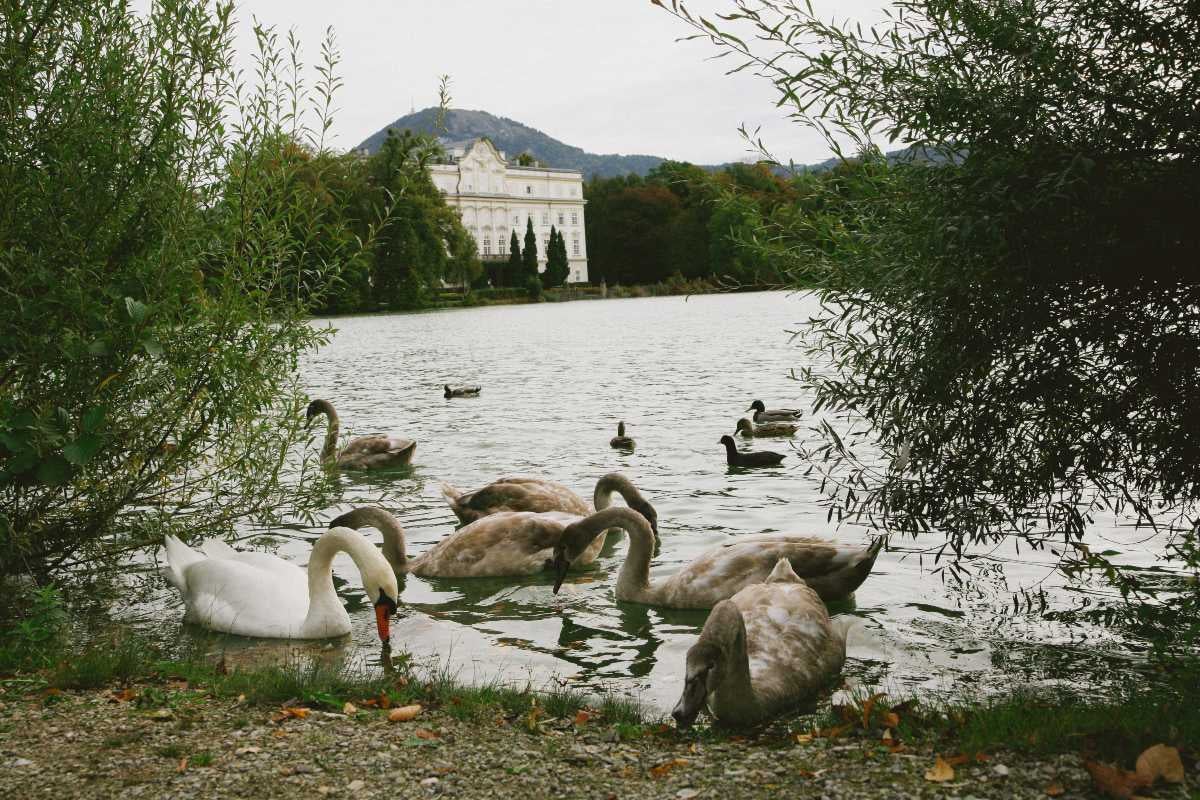
Photo by Shelby Smith Mick, 2012 Vienna cohort
Posted 8/17/26
Thirty years ago, one professor took a step of faith in a quest to open students’ minds.
Drawing on her own experience as a student who had traveled to Europe twice—one semester in Italy through her college’s program and another through direct enrollment in France, then-Assistant Professor of English and French Kimberly Reed felt it was important for every college student to spend time immersed in another culture and language so as to understand what it feels like to be a foreigner.
She went to then-Lipscomb President Harold Hazelip and told him just that, suggesting that the university begin its own study abroad program.
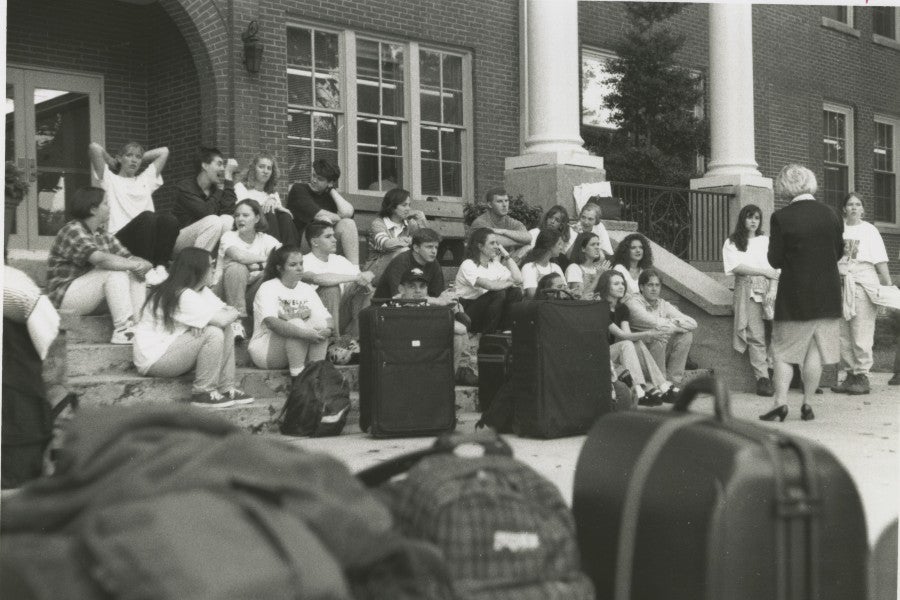
Then-Assistant Professor of English and French Kimberly Reed (at right) prepares students in the first Vienna cohort in 1996 for the beginning of their journey.
He agreed, and a few months later, Reed found herself heading up a faculty task force to figure out the best way to make it happen. The group of six faculty chose Vienna as its central hub for the first trip in 1996.
Thirty years later, after massive changes in technology, the economy, politics and how we live our daily lives, the global learning model established by those faculty in that year is still opening the minds of today’s students, not just in Vienna, but also in London and Florence.
In 1995, when the program—then-called the Lipscomb Overseas Program—was announced, Hazelip said, “Historically, one of the major benefits of a quality liberal arts education is an exposure to a variety of cultures. We believe the program in Vienna will develop in our students an understanding of other cultures, and that they will be more productive citizens as one result.”
And the results cannot be denied:
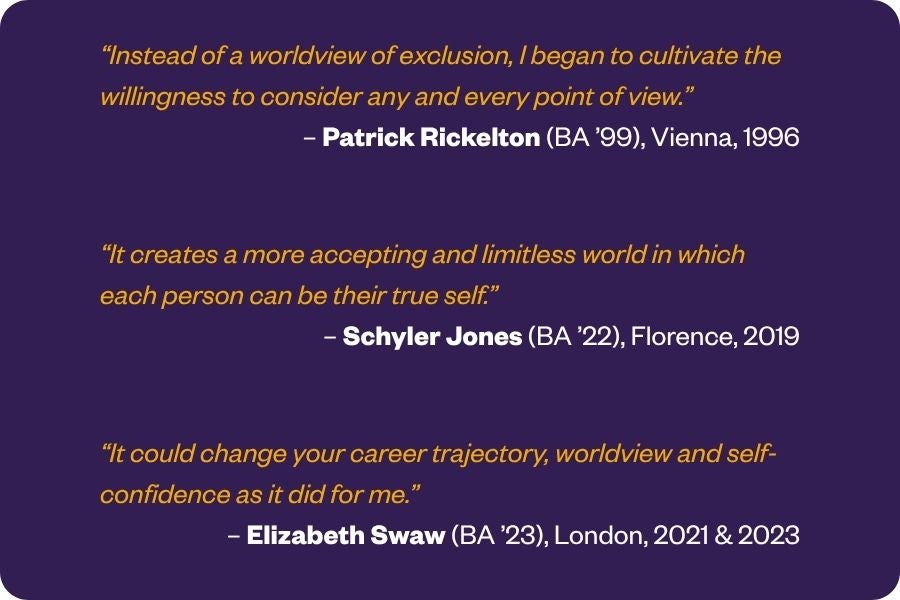
This is the impact in the lives of just three of the more than 1,900 students who have made the journey to learn beyond the classroom in Vienna as well as five other overseas locales over the past 30 years.
“We all know students are different than they were 30 years ago,” said Kate Minchew (BA ’11), today’s director of global learning. “Technology has drastically changed, with everything from Yelp reviews to TikTok videos shaping the way students travel today, but the experience of learning how to travel remains the same.
“Students are still in this unique time in their lives, and study abroad is an opportunity for them to learn skills that they might not be able to in the U.S. They are still learning to be adaptable and flexible, and how to use their resources. Students are still students.”
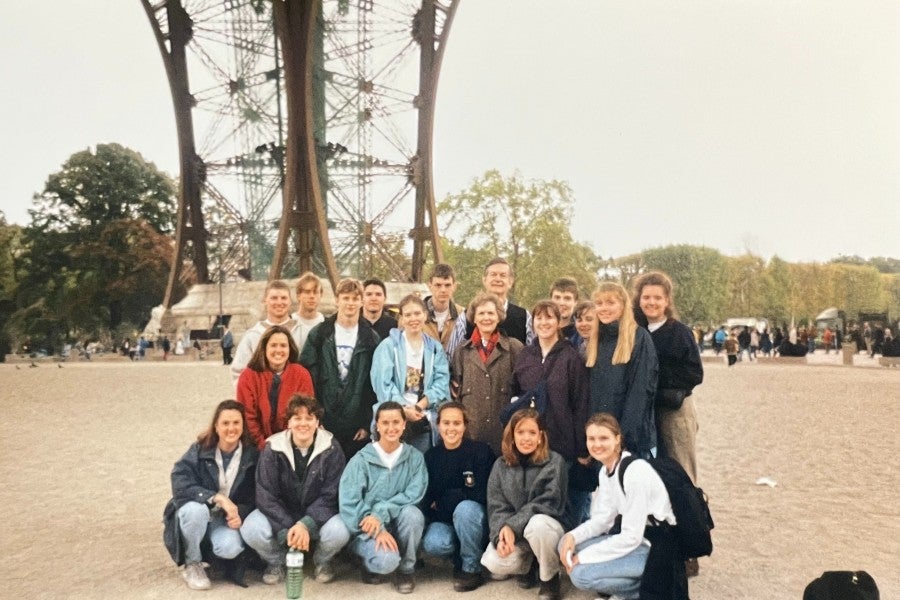
Members of the the first Vienna cohort in 1996 with Lipscomb President Harold Hazelip (center, back row) in Vienna.
And those students emerge from the three-month experience calling it a life-changing and career-defining experience. Some find their lifelong partners through the trip. Some find lifelong friends. Some find a new career or calling. All find new perspectives and skills that serve them well in today’s world.
In fact, the Forum on Education Abroad reports that business students who study abroad earn, on average, $4,159 more in their first job than students who did not study abroad. Ninety percent of alumni say that studying abroad taught them job skills, critical thinking, adaptability and cross-cultural communication.
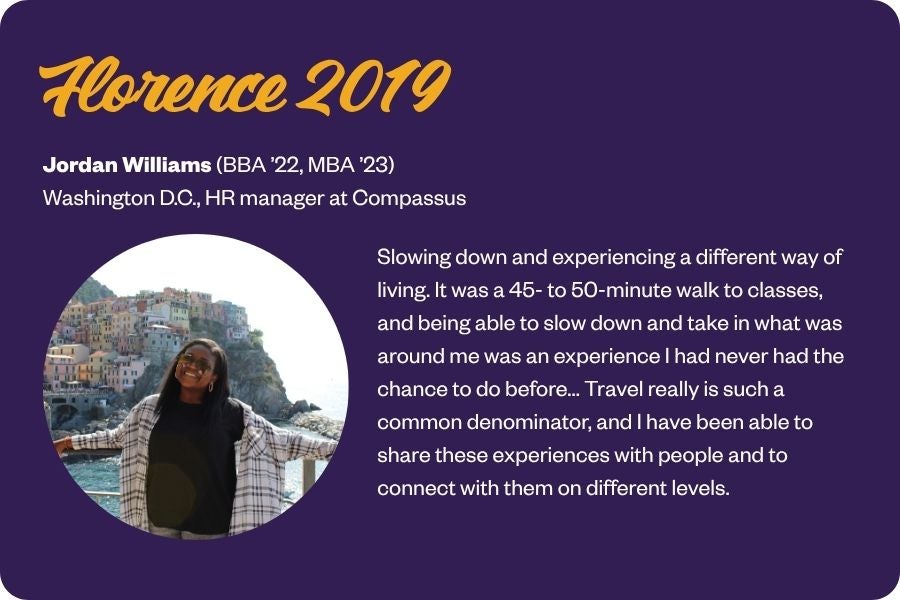
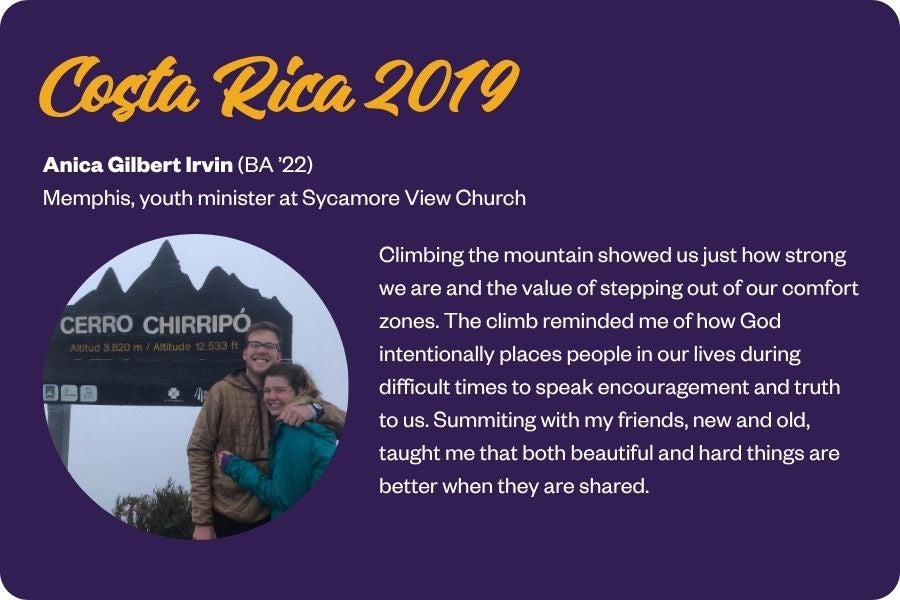
Read on to hear the voices of Lipscomb alumni sharing how Lipscomb Global Learning has impacted their lives and relationships over the past 30 years.
Bisons Abroad, Bisons At Home: Global Learning alums, don't forget to attend Bisons Weekend, Nov. 5-8, and look for the Global Learning table at the Bison Square Fair from 12-2 p.m. and the Global Learning 30th Anniversary Dinner, from 6-9 p.m., both on Nov. 7. And you can keep on reminiscing even before the dinner by sharing your favorite memories and photos and providing your current career and life information.
Lipscomb’s Grand Tour
Lipscomb’s first semester-long global learning opportunity was held in fall 1996, when 30 students, accompanied by now-retired Charlie McVey (LA ’63, BA ’67), then-chair of the department of foreign languages, traveled first to London for a week and then on to Vienna.
Vienna had been chosen by the faculty task force (Reed, David Lawrence, Gary Hall (LA ’81, BA ’84), Doug Varnado (MA ’87), Jim Arnett (BA ’67) and McVey) due to its historical and political significance, its status as a large international capital, its central location on the European continent and its rich cultural contributions in science, medicine, music and philosophy.
The city’s central location was important because faculty strongly wished for students to spend much of their time traveling to other European locales, so much so that they decided to hold classes only four days per week and included a Eurail pass for every student.
The long weekends for small group travel were inspired by a model tried and true throughout history: that extensive travel has historically been a major part of a young person’s education, said Reed, the first director of the program.
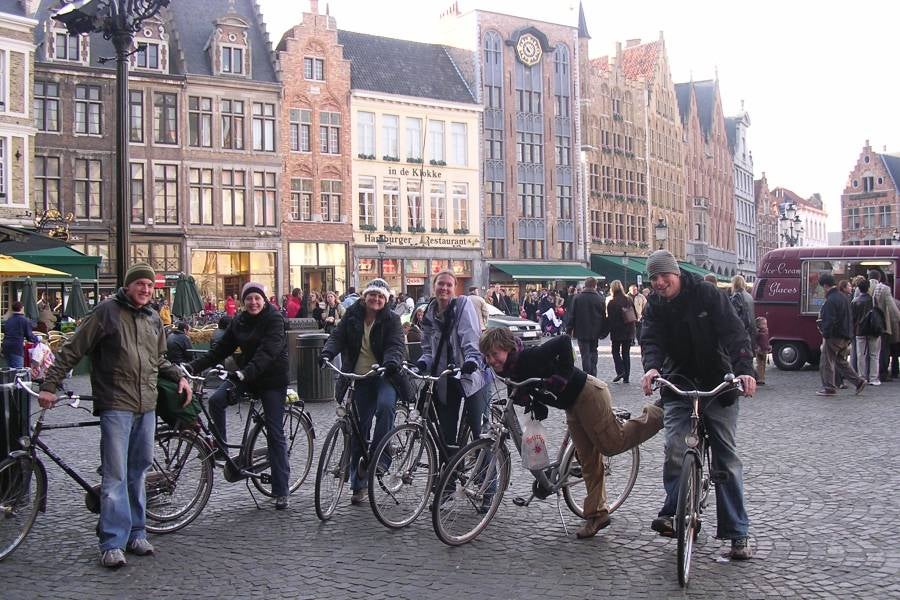
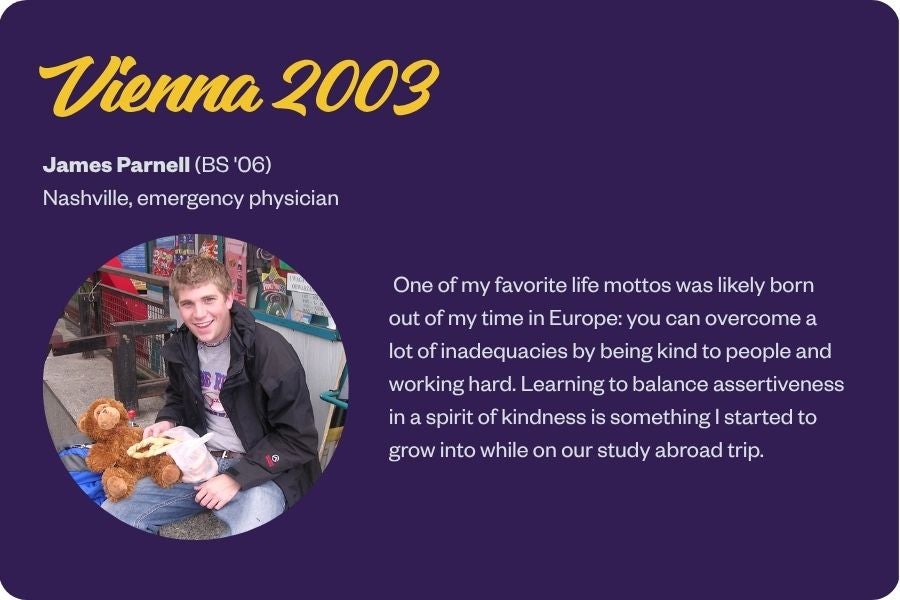
The 2003 Vienna cohort, with James Parnell (BS ’06) on the far right.
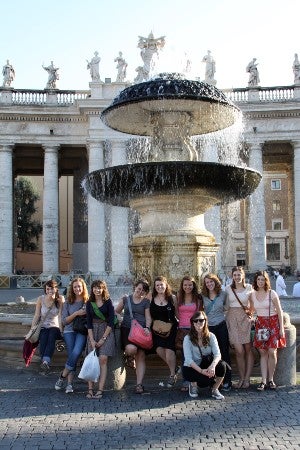
Photo by Erin Channell (LA '10, BA '14), Vienna 2011
“Beginning in the Renaissance and continuing for hundreds of years, well-educated young men took what they called the ‘Grand Tour’ of Europe,” she said in 1995 at the program announcement. “That was the crowning event of their education.”
For most Vienna alumni, the weekend trips with their friends are among the first stand-out experiences they mention. Over the years students have seen the famous ancient structures of Italy, climbed mountains in Costa Rica, caught sight of the Northern Lights above the Arctic Circle, made friends with Polish locals on a trip to Auschwitz, visited the famous beaches of Normandy, paraglided in the mountains of Switzerland and communed with nature in the Cotswolds, among many, many more.
“We still value the academic importance of independent travel. The things that students learn through short weekend travel experiences are really beneficial to their growth over the semester,” said Minchew, noting navigation of public transportation, meeting locals who speak a different language, trying new foods and exploring new locations as among the valuable learning experiences.
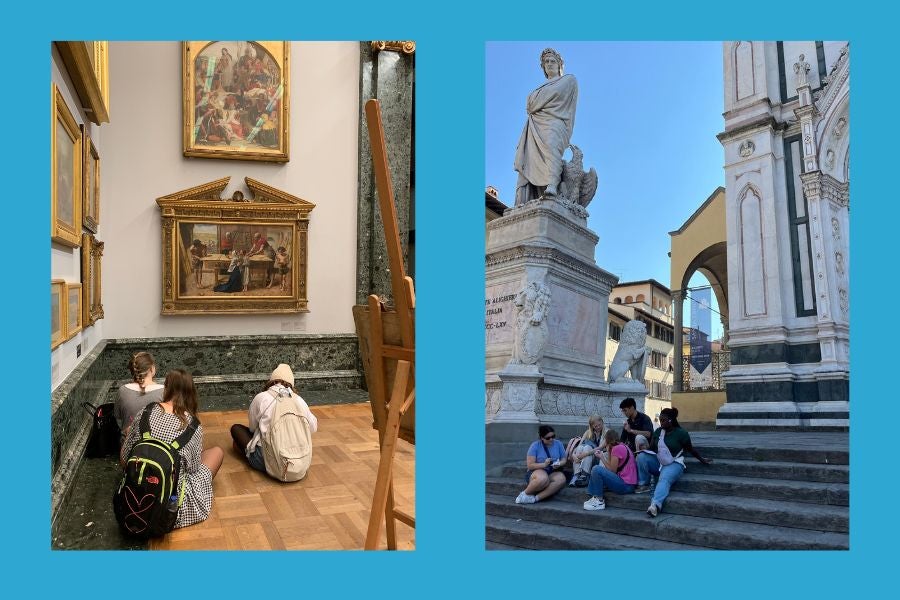
(Left) These students in London learned the value of being able to immediately see the art they studied in their textbooks. (right) Each Florence program starts with students on a scavenger hunt around the Santa Croce neighborhood of the city.
In the early days of Lipscomb Global Learning, before cellphones, GPS and Google Maps, professors provided much more assistance in helping students make their weekend travel plans, said Reed. Today, students have support from their site directors to help them wade through the limitless travel recommendations and advice they find on the internet. At the end of the day, students are still learning how to navigate the same things like public transportation, language barriers and travel logistics, said Minchew.
Back in 1995, Reed noted the internet as one reason students craved travel more than in the past, as they were able to discover new cultures through their desktop computers. Today, the internet on cellphones provides a constant connection to friends and families back home, which has somewhat changed the global experience, said Matt Hearn, a six-time faculty leader for the Lipscomb in London program.
“It used to be that when you left home, you really left home. That was the only option, to leave your friend group for three months,” said Hearn, now the director of the Health Professions Advisory Committee. “Today it’s more challenging for students to really get away from home.”
So Hearn, who plans to lead more London study trips in the future, works harder to introduce students to the value of simply wandering to learn the city, how to read a non-digital map and how to be adventurous.
“Part of what I love about London is learning the city,” said Hearn. “It makes me feel good when I see students starting to recognize the different personalities of the boroughs of the city.
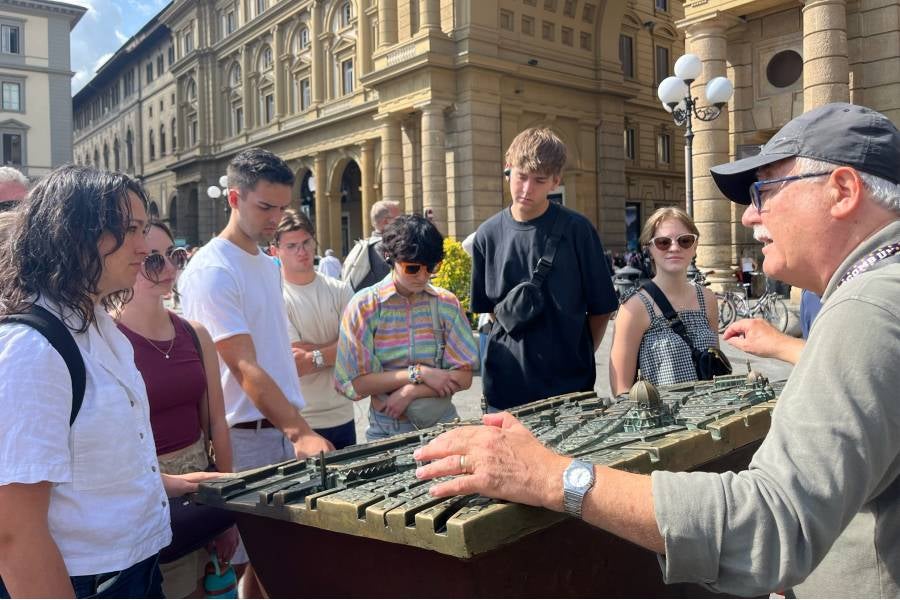
While international travel is an important part of global learning, students also earn 12-16 credit hours while studying in Florence (shown here), London or Vienna.
“It’s amazing what students can learn to do, in terms of how to go from one country to the next,” he said, “how to consider time changes and train schedules, how to buy tickets and how to overcome last-minute flight changes. Crisis doesn’t faze them at all. Putting students into situations where they have to adapt—that is really important.”
This experience of learning life along with history and language is what alumni of Lipscomb Global Learning most often mention as the most valuable experience of the trips.
“The most vivid memories I have are the ones of traveling with some of my dearest friends. We were using travel books, ripping pages out of them and stumbling into towns in hopes to find a place to stay or a hostel to sleep in,” said James Parnell (BS ’06), a Vienna participant in 2003. “Those opportunities to build independence, as well as teamwork together, provided an amazing education in how to problem-solve and overcome challenges in real time.”
“I studied abroad in 2011, so smartphones were just beginning to be accessible, and we did not have service without Wi-Fi. So we often would load up directions on our phones days before and then hope and pray for the best,” said Erin Channell (LA ’10, BA ’14), 2011 participant in Vienna. “I will never forget learning how to use the train system to travel all over Europe. It made for a lot of unexpected adventures and some of the best memories of my life.”
Adding to the itinerary
The Lipscomb in Vienna program was simply a jumping-off point for Lipscomb’s adventure in global learning. In the early 2000s, a summer study abroad experience in London, which combined coursework with internships, was established. That program morphed into the semester-long Lipscomb in London experience launched in 2014 and an internship experience launched in 2021.
Eight students have earned valuable international work experience in London in career areas from finance to fashion so far.
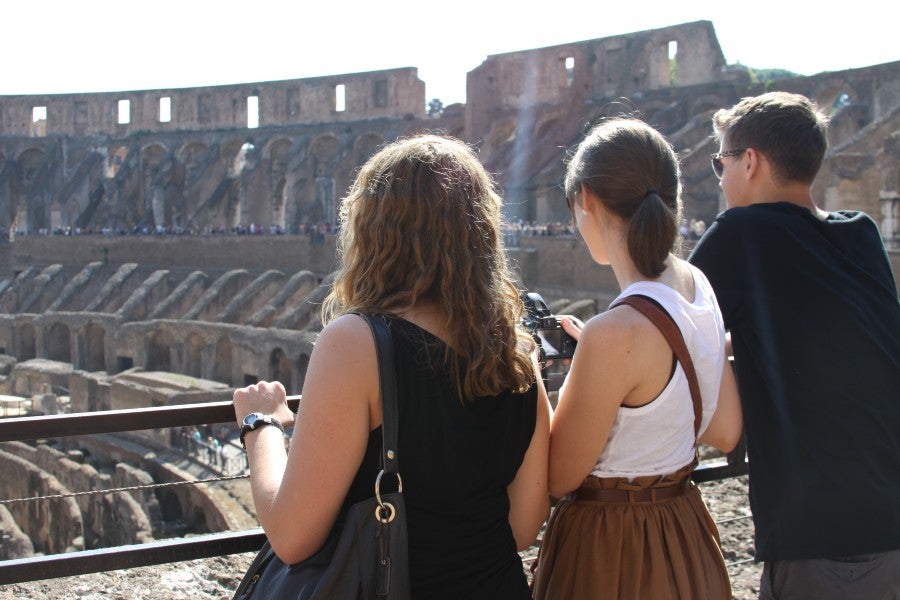
Travel throughout Europe is encouraged in all the study abroad programs. These three students took a trip to the Colosseum in Rome.
“Completing an international internship is something that differentiates students seeking that first internship or first job in Nashville,” said Makala Marsee (BA ’22), Lipscomb’s on-campus global learning programs coordinator and also the first Lipscomb student to participate in the London internship program as a marketing intern at a fashion house in 2021. “It’s something that very much stands out.”
In 2015, the university established the Lipscomb in Florence program, and in 2016 a generous donor helped Lipscomb purchase its own villa where students can live and study.
“The Lipscomb in Florence program challenges students in every aspect—spiritually, academically, and in interpersonal relationship skills, all within the delightful framework of Italian cuisine, culture, landscapes and sweetened by gelato,” said Emily Woodroof, the on-site director in Florence. “We are intentional about providing opportunities for students to learn and grow both in a community setting and individually, through community engagement, experiential learning and language acquisition activities.”
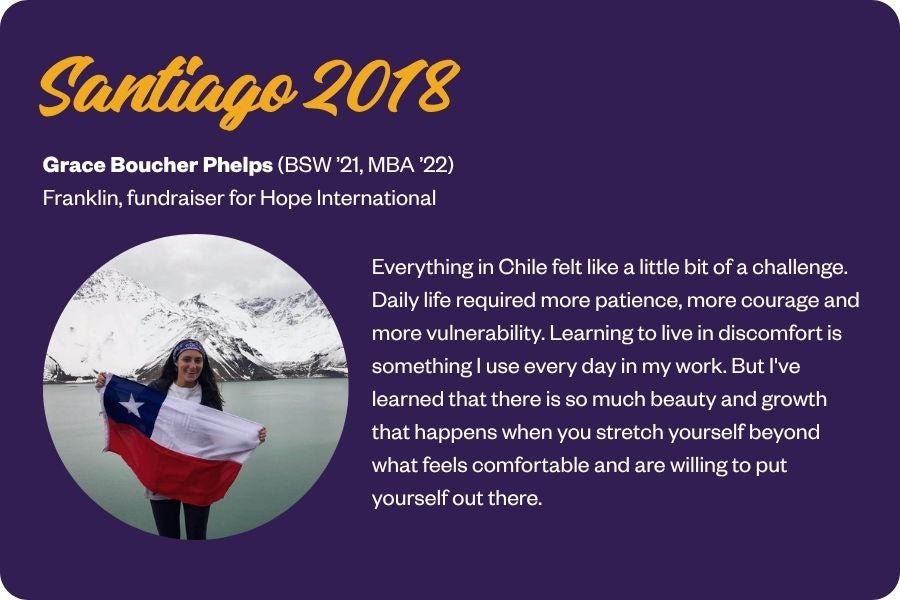
Throughout the years, the university has also offered semester-long study abroad in Santiago, Chile; in Bath, England; and Costa Rica, as well as a variety of short-term faculty-led trips focused on specific vocations each year. Each program has had its own character and unique learning experience.
Lee Camp, a retired professor of theology and ethics in the College of Bible & Ministry, led student groups to London, Florence and Santiago over the years.
“I always leave [London] having learned a great deal more about who I am as an American of European descent… Santiago, Chile taught me a great deal about the way in which the Cold War impacted people scattered across the globe… Florence just taught me a great deal more about being human, beauty, and the long human quest for wonder and awe,” he said.
“I've always loved the line (apparently mis-attributed to St. Augustine): ‘The world is a book and those who do not travel read only one page.’ It is one of the richest experiences one could ever have as a student, a scholar and a teacher,” said Camp.
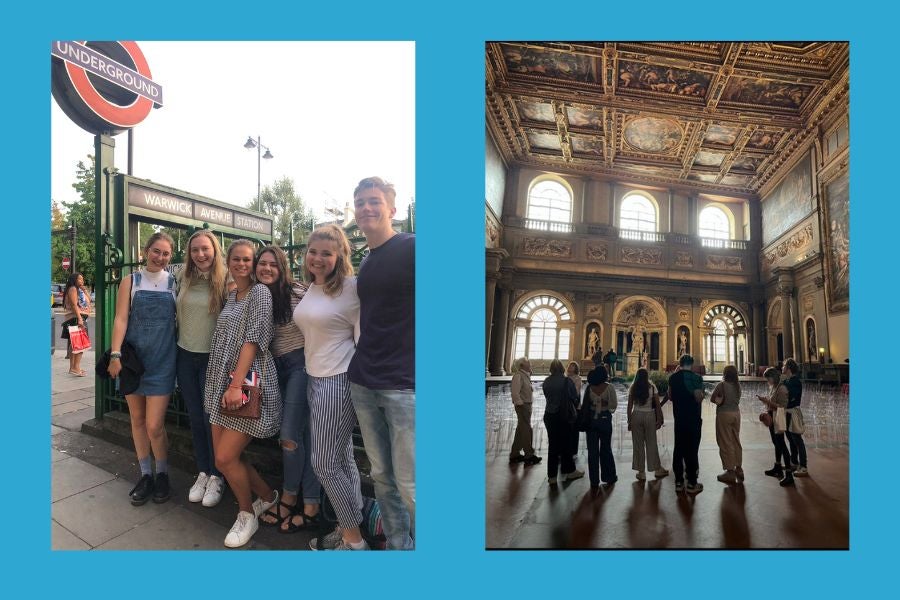
(left) Students at an entrance to the Underground in London. (right) Students in Florence at an on-site class in 2025.
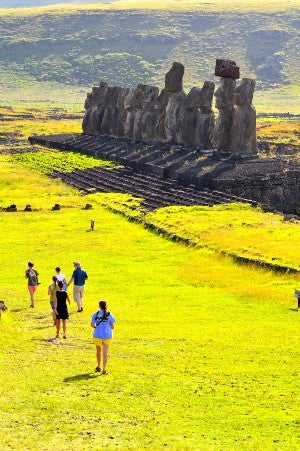
Students saw the ancient moai statues through the Santiago program.
In 2010, Melissa Swann (BA ’09, MS ’12), one of McVey’s past German students, took over leading the Lipscomb in Vienna program as its first on-site director. She worked with the program for a decade and brought a new level of continuity and academic rigor to the experience, said McVey, who went to Vienna 17 times from 1996 to 2010.
After participating in the spring 2017 Lipscomb in Vienna program, current on-site director Ashley Burklin (BA ’19) felt academically equipped to pursue her Master of Arts at the University of Vienna. She has remained in Vienna and has been leading the program since fall 2021.
“This kind of experiential learning can only happen on the ground, in person and with a sharpened awareness of the surrounding world. Students participate in rigorous tours, listen to engaging lectures and are exposed to diverse cultural experiences, all of which foster deep learning,” said Burklin. This is what study abroad is all about: having full contact with transformative experiences that go on to shape a student’s future.”
Alumni of all the global learning programs have remarked over the years on the value of being able to read information in a textbook and then that very afternoon to go see the painting or the site or the church in person.
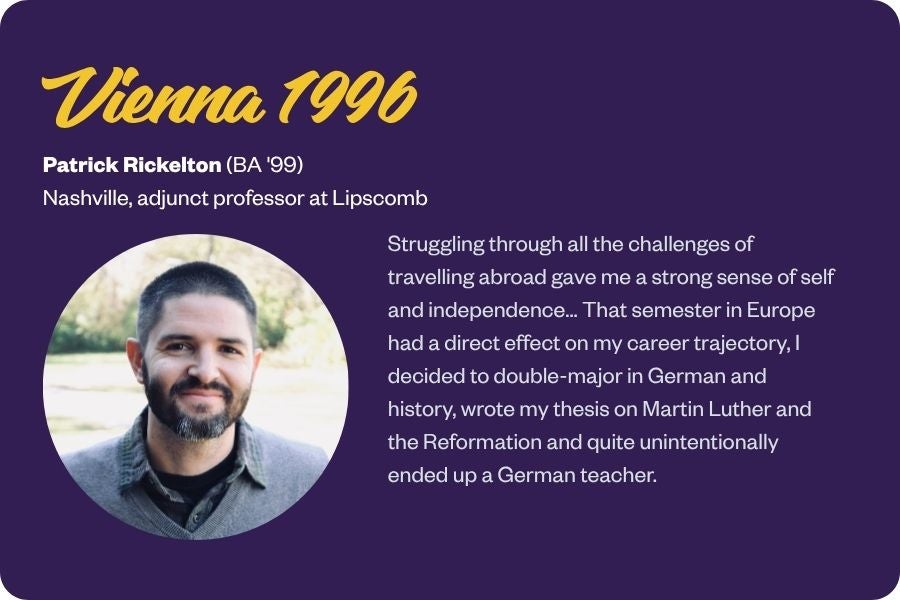
“Art became much less of an abstraction for me,” said Patrick Rickelton (BA ’99), a participant in the very first Lipscomb in Vienna trip in 1996. “To study art and then go see it in person was special for me. It made it more meaningful.”
Today, Lipscomb Global Learning has three site directors, with Morgan Delong (BA ’18) joining Woodroof and Burklin as site director in London, and all six of the Global Learning staff studied abroad during their college years.
“Since we have all studied abroad, our team really understands the student experience. We know how important and transformative the experience will be for each of our students. Without a doubt, they come back more thoughtful, curious, and independent,” said Minchew.
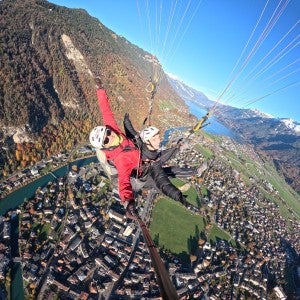
Gavin Cavender (Class of 2028) paragliding in Interlaken, Switzerland, on a weekend trip during his semester in Vienna in 2025.
Global community back at home
Students also come back with a ready-made community for their college experience. The program has sparked untold friend groups whose relationships last for years and not an insignificant number of now-married couples. Every year up until she left Lipscomb in 2024, Reed said she would see the Global Learning students walking through campus in groups throughout the rest of their college career.
“That Vienna group became my closest friends. That shared experience was life-changing,” said Erin (Collins) Rickelton (LA ’95, BA ’99), who participated in the first Vienna trip in 1996. She went on to marry one of the other trip participants, Patrick Rickelton, after they continued to hang out in the same Vienna friend group upon their return. The Rickeltons are one of three couples from the 1996 Vienna group that eventually got married, said McVey.
“I felt a special connection with all of them. They were the people I wanted to be around the most,” Erin said. She has been an art teacher at Lipscomb Academy for 27 years and Patrick is now teaching German at the university.
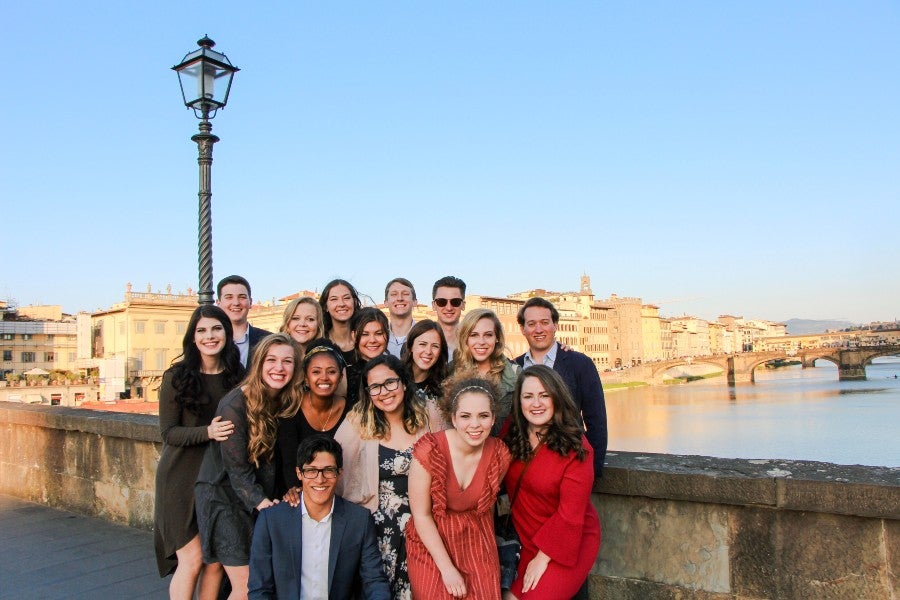
In 2015, the university established the Lipscomb in Florence program, and in 2016 a generous donor helped Lipscomb purchase its own villa where students can live and study.
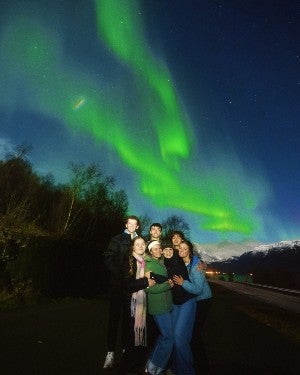
Some groups have travelled to Norway to see the Northern Lights.
“We relied on those 30 people a lot. They became our friends and family. They problem-solved and were creative,” said Erin, noting that in 1996 the students had no connection beyond mail with their families back home. “We were very much in the present moment, and I think that helped us all bond and helped us experience what we were seeing truly and clearly.”
In addition to their own personal community, students, first and foremost, learn about who they are within a global community, say program leaders. From the beginning, Reed said the goal was for students to see themselves as “world citizens.”
“It excited me to see their minds open to new ways of thinking and dealing with life,” she said. “It gives them a stronger basis for understanding their own mindset, whether religious, social or educational. All areas of their lives are enriched by access to a foreign culture.”
The goal remains the same 30 years later.
“They come in with a sense of empathy and curiosity about other people and cultures,” Minchew said of today’s students. “They have the world at their fingertips on their phone, but when they see it in real life, it suddenly feels very different. These students are a testament to the fact that in-person experiential learning has just as much impact today.”
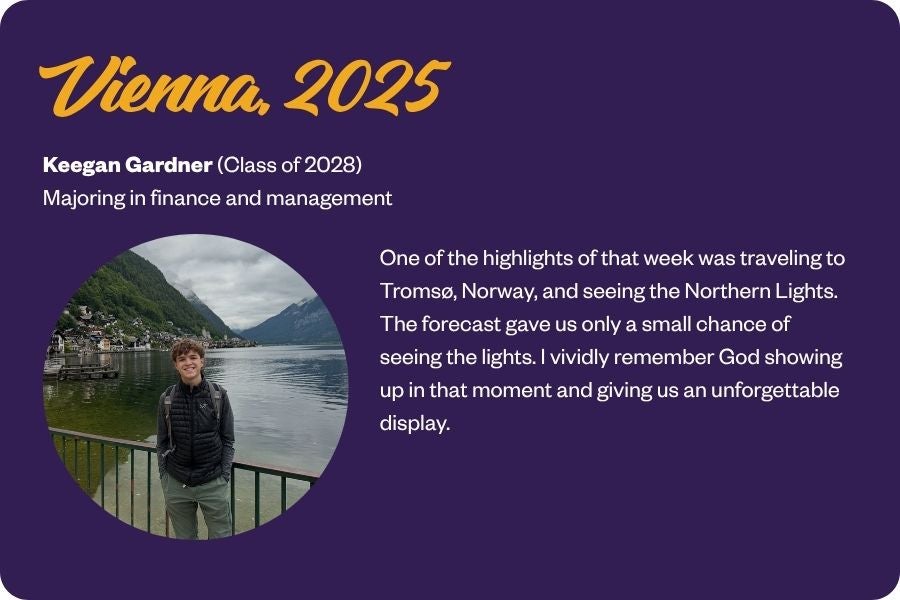
Bisons Abroad, Bisons At Home: Global Learning alums, don't forget to attend Bisons Weekend, Nov. 5-8, and look for the Global Learning table at the Bison Square Fair from 12-2 p.m. and the Global Learning 30th Anniversary Dinner, from 6-9 p.m., both on Nov. 7. And you can keep on reminiscing even before the dinner by sharing your favorite memories and photos and providing your current career and life information.