Lipscomb faculty share expertise through the written word
By Janel Shoun-Smith | 615-966-7078 |

Lipscomb faculty are always seeking to learn and always willing to share their discoveries. Various faculty members put pen to paper to produce books released in 2025 and 2026. Subjects vary from cutting-edge use of AI to Christian children’s humor, from the biography of a football icon to education in today's high-tech digital life, but each volume shares new insight, knowledge and informed perspective.
- Tim Johnson: Robert Neyland: The West Point Engineer Who Built Tennessee Football
- Leonard Allen: A Wild Democracy (Vol. 1 of 3): The Struggle for the Soul of Churches of Christ, 1889-1939
- Emily Mofield: Beyond the Screen: Tools for Meaningful Inquiry and Deep Learning in a Digital World
- Jeffrey Adams: Engaging Minds: Rethinking Assignments for Critical Thinking in the Age of AI
- To Love Thy Neighbor: Exploring the Role of Religious and Social Belonging on American Polarization
- Meagan Spencer; Building Inclusive AI: The Complete Ecosystem Guide
- Mike Nawrocki: The Dead Sea Squirrels: Cybersquirrels & The Dead Sea Squirrels: Field Day Frenzy
- Kelly Kidder: Apparences: A Novel Approach to Elementary French
Go to the Full Faculty Reading Room
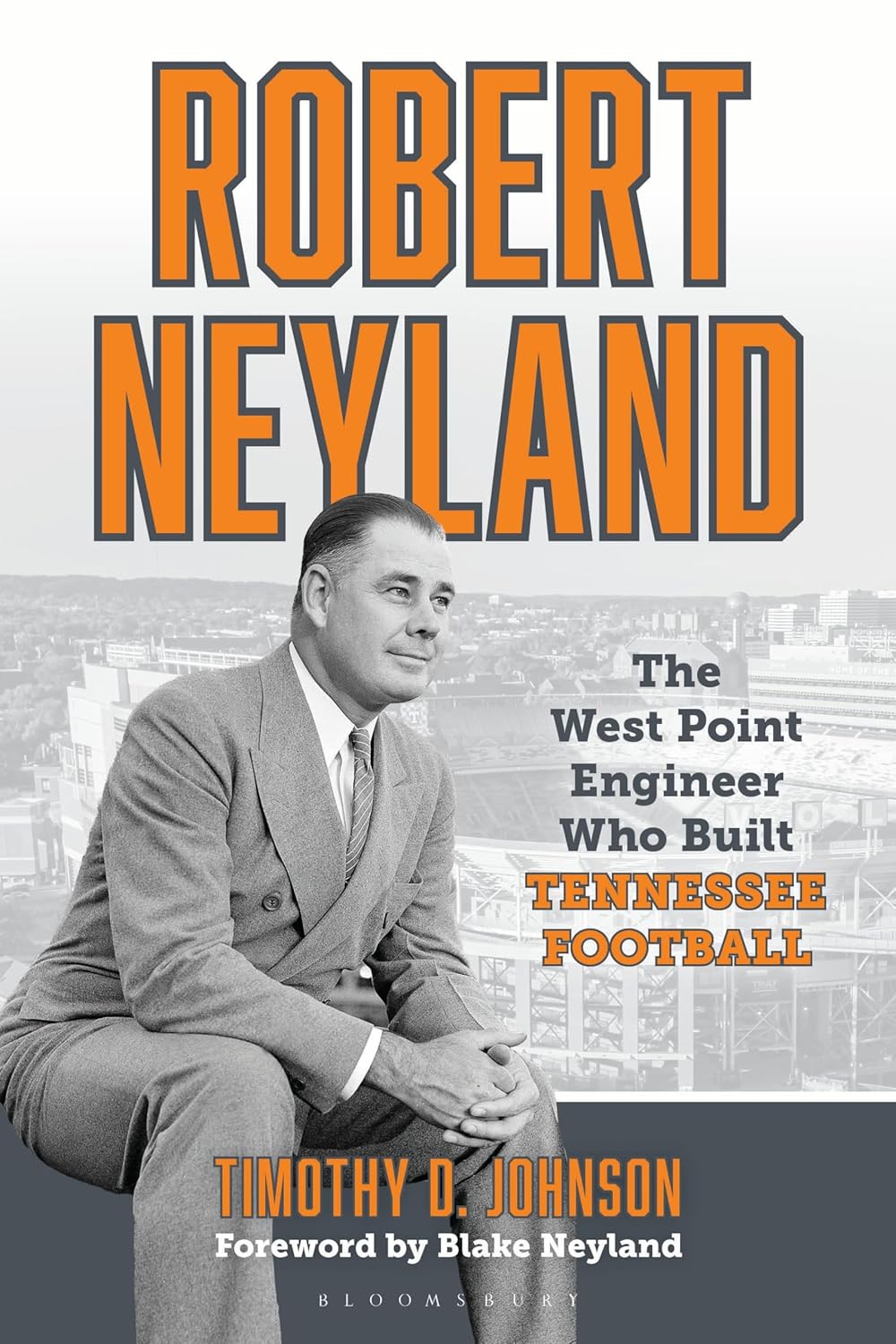
Robert Neyland: The West Point Engineer Who Built Tennessee Football
Dr. Timothy D. Johnson, Elizabeth Gentry Brown Professor of History
College of Liberal Arts & Sciences
Bloomsbury Publishing, released on July 9, 2026
Robert Neyland, know as “The Bull,” was not your typical college football coach. A graduate of West Point and veteran of both world wars, Neyland often played a dual role as both an army officer and football coach, shifting seamlessly between the two professions. At the University of Tennessee, he ran his program like the army and amassed an impressive 173-31-12 record.
In Robert Neyland: The West Point Engineer Who Built Tennessee Football, Timothy D. Johnson provides deep insight into Neyland's life and incredible career. Featuring interviews with the only living former players from the Neyland era and including new details from the Robert R. Neyland Family Papers, Johnson brings Neyland's story to life, revealing how Neyland's success resulted from his stern discipline and ability to put together consistently dominant defenses.
It's a story that is sure to not only fascinate fans of Tennessee football, but sports and military historians, as well.
Learn More about Johnson's Latest Book
Learn More about Lipscomb Students' Documentary “The Bull”
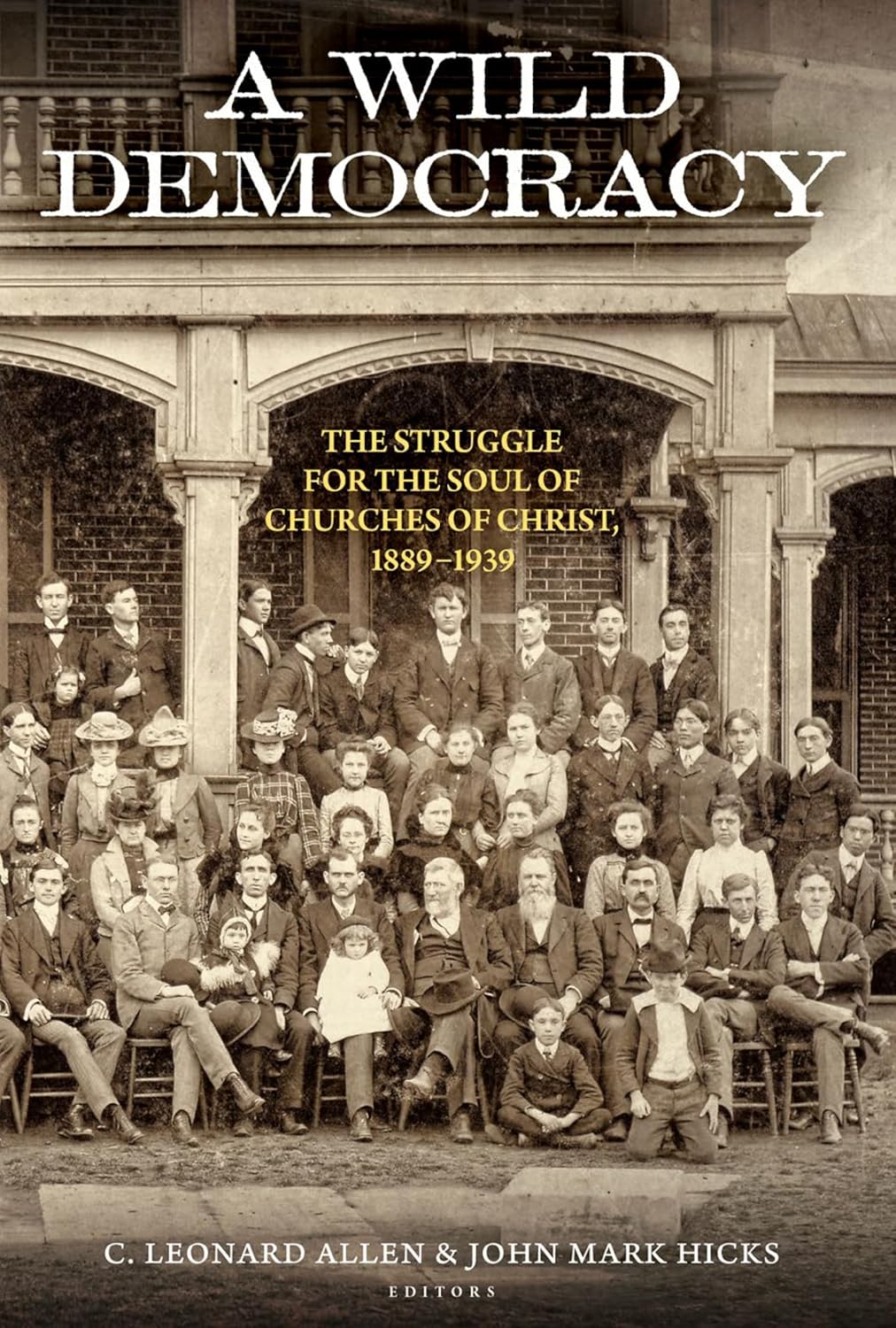
A Wild Democracy (Vol. 1 of 3): The Struggle for the Soul of Churches of Christ, 1889-1939
Dr. Leonard Allen, Dean
College of Bible & Ministry
Abilene Christian University Press, available now
A Wild Democracy is a fresh, provocative new interpretation of the story of the churches of Christ as they fashioned a new identity in the opening decades of the 20th century.
The book begins with the separation from the Disciples of Christ/Christian Church, viewing the division from the perspective of four leaders in Churches of Christ: Daniel Sommer, David Lipscomb, Samuel W. Womack, and T. B. Larimore.
The long ordeal of separation was followed by several decades of intense identity-forming controversy—a theological free-for-all, a “wild democracy.” Everyone could express their convictions and press their case; no one could dictate with any finality a list of required beliefs, though many tried. Schism was inevitable.
In the midst of this, three main traditions emerged seeking to define the new identity. Many sharp controversies ensued: The two biggest of the first decade were rebaptism and the indwelling of the Holy Spirit; the most controversial one of the 1920s and ’30s was premillennialism.
By the 1930s, after several decades of steady and intense, often uncivil controversy, something like a doctrinal standard emerged. For a time, it held together a loose and tenuous unity between the three traditions. But by mid-century, a major division was approaching, with others to follow—stories that volumes two and three will tell.
Learn More about Allen's Latest Books

Beyond the Screen: Tools for Meaningful Inquiry and Deep Learning in a Digital World
Dr. Emily Mofield, Associate Professor in Education
College of Education
Routledge Press, to be released in fall 2026
Few could deny that children’s extensive use of digital devices is having society-changing impacts on future generations. Educators are on the front lines of shaping what that impact will be.
Mofield, who has written or co-written 13 books on gifted education and instructional coaching, is taking that challenge head on in her next book, Beyond the Screen: Tools for Deep Thinking and Meaningful Inquiry in a Digital World, exploring how constant digital connectivity and overuse of screens affect student learning.
This book will equip educators of grades 4-12 with practical strategies to manage these challenges, improve focus and foster deep engagement in learning, guiding students toward meaningful inquiry and sustained curiosity, said Mofield.
Mofield collected questionnaire data from K-12 teachers on their perceptions of how screens have affected students’ cognitive stamina as they engage in problem solving and complex tasks. The development of the book was funded by a Lipscomb institutional research grant.
Mofield, who has been researching and developing methods of gifted education since 2011, arranged the content into an easy-to-digest framework with its own acronym: DEEP (Designing Cognitive Rigor, Engaging Inquiry and Creativity, Executive Function Development and Purposeful Integration of Technology) and provides actionable tools for educators to foster engagement and problem-solving skills.
Focused on combating the impact of constant screen use, such as fragmented focus, conditioning for instant gratification and a growing tendency toward surface-level skimming, the book addresses building cognitive stamina through scaffolded complex tasks and developing students’ executive functions such as time management and metacognition.
The work highlights the need to balance high-tech with low-tech learning experiences and provides strategies for shifting students’ technology use from passive consumption to active creation in learning, such as digital storytelling, use of simulations and virtual mind-mapping.
The Beyond the Screen content will enhance the skill-set of teachers of all ability levels by providing practical ways to teach for deep learning and to prepare them to collaborate and coach other educators to apply these methods.
See More Mofield Books in the Reading Room
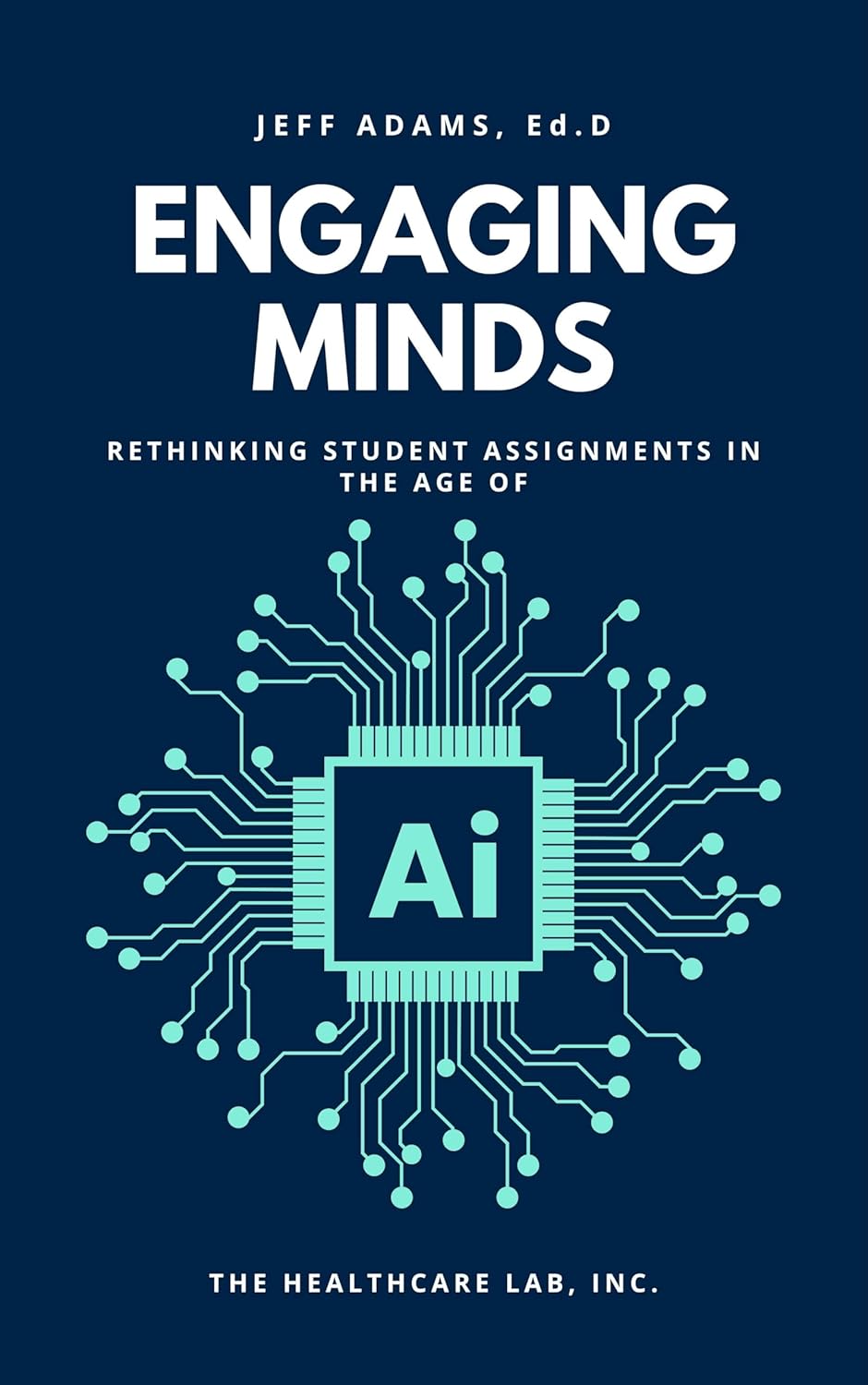
Engaging Minds: Rethinking Assignments for Critical Thinking in the Age of AI
Dr. Jeffrey Adams, Director of College of Health Sciences Simulation Center
College of Health & Human Sciences
The Healthcare Lab, available now
Engaging Minds is a bold, practical call to redesign education for a world transformed by artificial intelligence (AI).
From early struggles with undiagnosed dyslexia to groundbreaking work in AI-powered medical simulation, Adams has spent decades designing learning experiences that challenge students to think critically—not just memorize facts or click through modules.
The work includes practical assignment frameworks that drive real critical thinking, strategies to leverage AI as a creative teaching partner and insights into how digital-native students actually learn—and how to reach them.
At Lipscomb’s simulation center, Adams has led efforts to expand the center’s curriculum, implement innovative AI-driven simulation tools and foster interprofessional training opportunities for both students and practicing healthcare professionals.
Adams is also the author of the Textbook of Modern Medical Simulation, and has healthcare simulation experience at Duquesne University, Edward Via College of Osteopathic Medicine, Philadelphia College of Osteopathic Medicine and The Ohio State University.

Scott Bledsoe
To Love Thy Neighbor: Exploring the Role of Religious and Social Belonging on American Polarization
Dr. A Scott Bledsoe (LA ’10, BA ’14), Assistant Professor of Public Policy
College of Leadership & Public Policy
Bloomsbury Press, released Nov. 12, 2026
Bledsoe’s personal experience growing up in Nashville and the Church of Christ and the societal polarization he watched in real-time among his friends and colleagues while earning his Ph.D. in 2022, inspired To Love Thy Neighbor, an expansion of his dissertation exploring how belonging to religious and social communities affects how people feel about “the other side,” meaning those with contradictory political views.
During his doctoral studies, Bledsoe conducted a national survey in 2021 about people's religious beliefs and behaviors, as well as their political beliefs, attitudes and opinions. What he found was that “we are really not that far apart on the issues but we are very far apart on how we feel about one another,” he said.
Bledsoe went on to explore how patterns of religious and social belonging, particularly among white evangelicals and the religiously unaffiliated, might be weakening or compounding the issue of America’s polarized politics.
By expanding our notion of religious belonging beyond simple church attendance measures, he argues that first, the term “evangelical” doesn't really mean what we think it does, as there is a notable amount of variation in what this group believes and how they belong.
Secondly he argues that while deep religious belonging, or bonding social capital, might explain high rates of affective polarization among white evangelicals, it doesn't explain why the religiously unaffiliated experience similar rates of polarization.
Finally, Bledsoe finds low levels of social and civic belonging among all Americans, a discovery that has important ramifications for polarization and democracy overall.
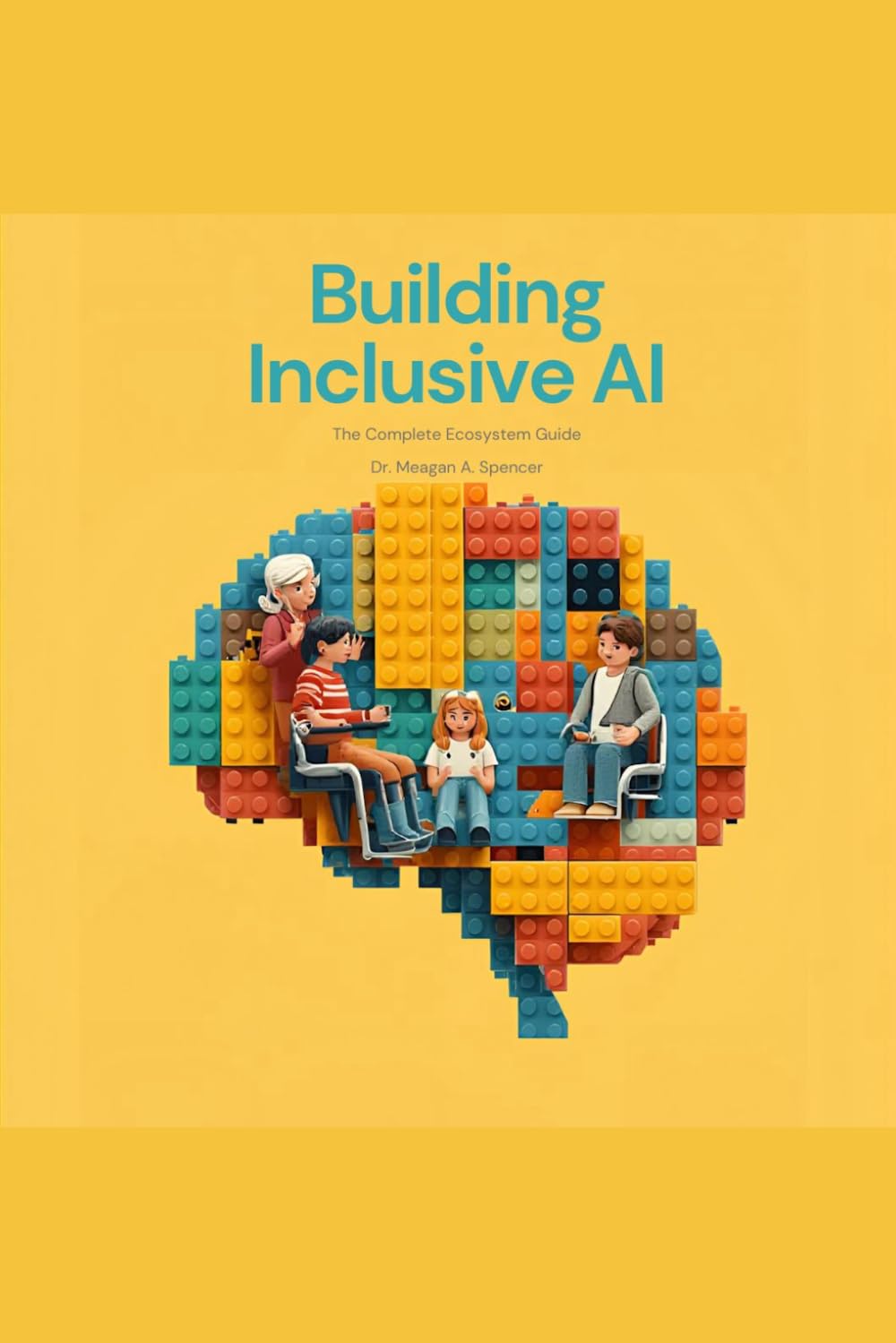
Building Inclusive AI: The Complete Ecosystem Guide
Dr. Meagan Spencer, Chair of Communication Sciences and Disorders
College of Health & Human Sciences
Independently Published, available now
Students with disabilities face persistent barriers in higher education, not from lack of ability, but from inaccessible design, says Spencer.
Building Inclusive AI introduces the ACCESS Framework, an original prompt engineering methodology for creating neurodiversity-affirming artificial intelligence (AI) tools that remove format-dependent barriers while maintaining academic rigor.
Grounded in Universal Design for Learning and disability rights research, this work teaches how to transform clinical reasoning into scalable digital solutions that presume competence, provide appropriate scaffolding and honor diverse ways of thinking and learning.
Spencer is a seasoned speech-language pathologist, educator, advocate for rural health care access and inclusive education.
She is a distinguished American Speech-Language-Hearing Association Early Career Professional and has served in various leadership roles on the executive board of the Tennessee Association of Audiologists and Speech-Language Pathologists.
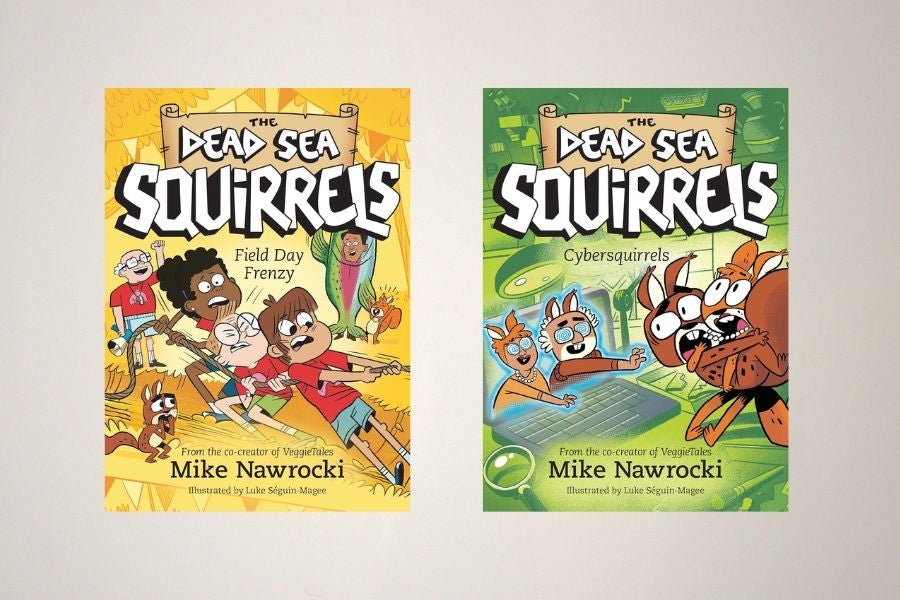
The Dead Sea Squirrels: Cybersquirrels
The Dead Sea Squirrels: Field Day Frenzy
Mike Nawrocki (MFA ’19), Visiting Professor in Cinematic Arts
George Shinn College of Entertainment & the Arts
Tyndale Kids
These are the latest books in Nawrocki’s chapter book series about Merle and Pearl, 2,000-year-old squirrels petrified in sea salt and discovered by ten-year-old Michael and his friend in the Dead Sea caves. Once fully revived, hijinks ensue and Merle and Pearl share faith-fueled life lessons drawn from their experience living in the time of Jesus with their new modern-day friends.
In Cybersquirrels (available now), the squirrels discover artificial intelligence as a handy solution to make-up homework and they all learn a lesson about integrity. In Field Day Frenzy (to be released in October 2026) the squirrels must overcome obstacles to help team captain Michael learn to work with his team amidst his greed for victory.
Nawrocki, the co-creator of VeggieTales, began the series in 2019 and the first book, Squirreled Away, marked 100,000 in sales this year. The series earned a bronze award from the Evangelical Christian Publishers Association this year. Last year he debuted on the web platform Minno an animated video version of the series produced through Lipscomb’s Imagine House production studio involving faculty and students.
Nawrocki, the voice of Larry the Cucumber, came to Lipscomb in 2017 after a 30-year career in production that earned him multiple Dove awards.
Learn More about Lipscomb's role in the animated version of Dead Sea Squirrels.
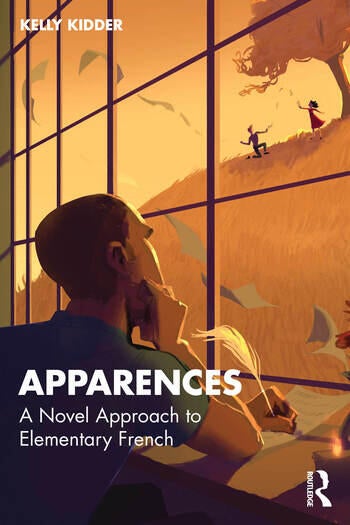
Apparences: A Novel Approach to Elementary French
Dr. Kelly Kidder, Professor of French
College of Liberal Arts & Sciences
Routledge, available now
Aimed at high school and undergraduate students, Apparences takes an approach to teaching French that encourages discovery of grammatical structures and vocabulary through an engaging, modern narrative inspired by the classic French play, Cyrano de Bergerac.
Through comprehensible language, each chapter tells the story of Max, a first-generation college student from the Democratic Republic of Congo, and Roxane, an exchange student from Italy.
The text encourages comprehension and allows teachers to provide the kind of prompts that engage students and facilitate meaningful interaction. The text finds compelling ways to contextualize the traditional vocabulary and grammar presented in many first-year textbooks, while also providing a means for students to engage deeply with what they are reading.
Kidder applied foreign and second language acquisition research, such as comprehensible input and output activities, joint production and dialogic inquiry, to create relevant and engaging language learning activities.
She received her Ph.D. from The Ohio State University in foreign and second language education, and instructs students and future teachers in research-based pedagogical practices both for public school classrooms and for teaching English abroad.