Lanier Center lends artifacts for Clayton Museum exhibition
Lipscomb doctoral candidate curates exhibit at Nebraska museum of ancient history
From Staff Reports |
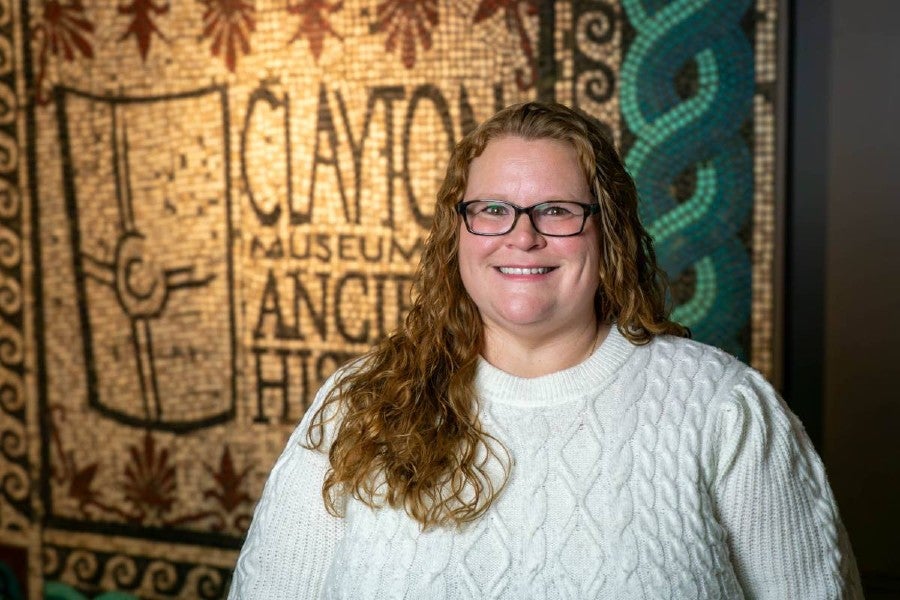
In collaboration with the new curator, Rebekah Ross, a doctoral candidate in archaeology at Lipscomb’s Lanier Center for Archaeology (LCA), the center has lent a selection of artifacts for temporary exhibit at the Clayton Museum of Ancient History on the York University campus in York, Nebraska.
The exhibit is titled “Ancient Stones, New Light: Rome, Christianity and North Africa.
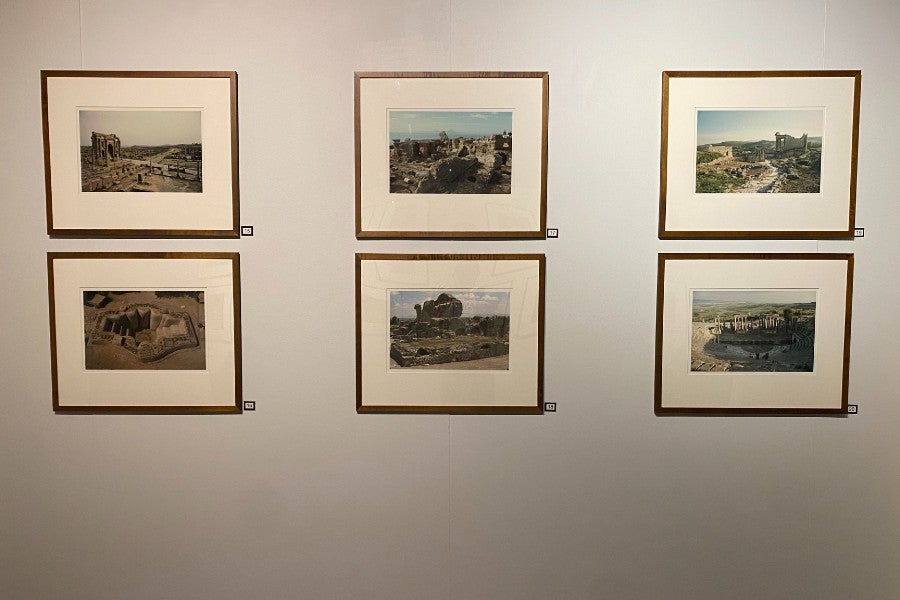
The exhibit features 21 photographs taken by Father Michael Flecky of Creighton University in Omaha, Nebraska.
Flecky was privileged to be in Algeria and Tunisia in the early 1980s and is considered one of the first photographers to capture the Roman and Early Christian ruins in that area. His photographs are among the earliest color images of these sites.
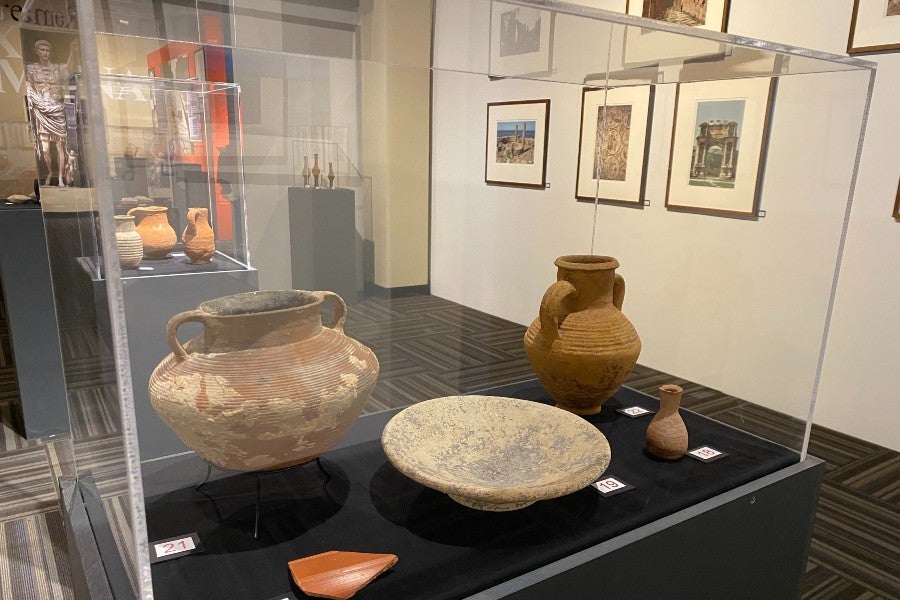
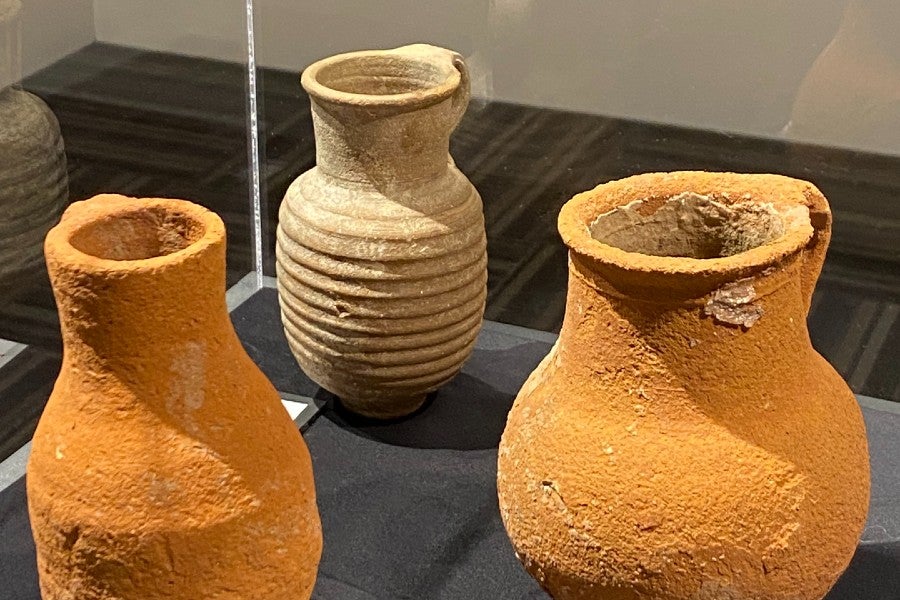
The LCA also loaned a variety of ceramic items, lamps and other artifacts to highlight the material culture that is captured in Flecky’s photographs.
The material culture of this time period reflects a culture and space that was transitioning from the Roman ideals into the early Christian period. Pottery and artifacts serve as a way to understand how the everyday person would have been experiencing this transition.
Additionally, the exhibit includes a few lamps and a bowl from the Westbrook-Hobby collection and two Abbasid-period lamps from the Stanback Collection.
Curator Ross, earned her master’s degrees in archaeology and Biblical studies from Southwestern Baptist Theological Seminary and Library and in information science from the University of South Carolina.
She brings years of experience in research and archeology, having served as an excavator at a 5th century site in Cyprus for eight years, including during her time studying at LCA.
Ever since she was a child, Ross has loved being outside and digging in the dirt, but she didn’t consider studying archeology until later in life. Originally a literature major, she assumed she would get her doctorate in English. But after attending a Bible study over the book of Isaiah, she began to explore other areas of interest.
“My favorite part of the study was when we were talking about the culture back then, the background information and how it connects to evidence we have outside of the Bible,” Ross said.
This newfound passion led her to archaeology, and in 2012 she did her first dig in Cyprus. “I absolutely loved it,” Ross said. “I got to get dirty as a job and then spend the other months in a library.”
Ross has no shortage of ideas for the museum. In addition to plans for a gift shop, Ross wants to create a greater focus on the Hellenistic period and provide more opportunities for interactive exhibits. She hopes to find ways to appeal to all of a visitor’s senses and to create more immersive experiences, giving visitors a fuller picture of ancient life.
“I want to tell a story,” Ross said. “One of the coolest things that archaeology brings to the table is that we can provide context, and we can help you understand what’s going on in the Bible, because although this was written for us, it was not written to us.”
As Ross reflected on the opportunity to work as the Clayton Museum’s curator, she expressed nothing but gratitude: “I don’t have the words to express how awesome this is,” she said. “I’m glad to be here!”