First Tennessee CAAs train at Lipscomb
New MS in anesthesiology sees overwhelming response from students desiring to become certified anesthesiologist assistants.
By Janel Shoun-Smith | 615-966-7078 |

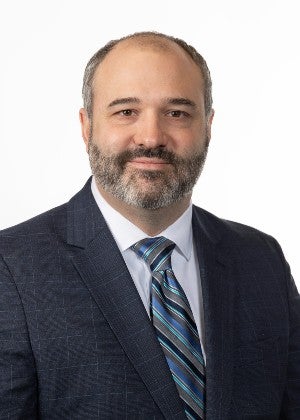
Todd Christian
Tennessee’s first-ever students in a Master of Science in Anesthesiology are approved and will begin courses at Lipscomb in August. Twenty-four students have been accepted out of more than 300 applicants for the state’s first program to prepare certified anesthesiology assistants (CAAs).
Following the enactment of new state law in January, CAAs can now practice in Tennessee, and Lipscomb stepped forward to establish the first academic program in the state to equip CAAs.
The program has seen overwhelming interest from potential students, and the first cohort includes students from both Nashville and across the nation with medical-school level credentials, said Todd Christian, inaugural program director.
“The reality is in Tennessee that there are ORs (operating rooms) that are not open right now all across the state because they don't have anesthesia care to provide for surgeons,” said Christian. “There's more surgeons and demand for surgeries then there are anesthesia providers to support those surgeries.”
Christian arrived at Lipscomb in October to begin building the program, which is the first-of-its-kind to be housed in a College of Pharmacy. In March, he became the first CAA to be certified to practice in Tennessee, with a license number of 1.
Christian brings to Lipscomb a multi-faceted background in clinical anesthesia, pharmacy, military healthcare and law enforcement, combining extensive operating room experience with a strong commitment to mentorship and service.
A licensed anesthesiologist assistant in Indiana and Florida as well as Tennessee, he has practiced in a wide range of surgical settings including cardiac, pediatric and obstetric anesthesia.
He most recently served as an anesthesiologist assistant with US Anesthesia Partners (USAP) in Fort Myers, Florida, and with Southern Indiana Anesthesia Consultants in New Albany, Indiana, providing anesthesia care for diverse procedures from open-heart operations to complex pediatric and obstetric cases.
In academia, Christian has been a clinical preceptor for student anesthesiologist assistants from institutions including Emory University, the University of Indiana, Nova University, South University, Case Western Reserve University, and VCOM.
A Nashville native with a B.S. from Trevecca Nazarene University and an MS in anesthesia from the University of Colorado–Anschutz Medical Campus, Christian has presented on anesthesia topics and is active in professional organizations such as the American Academy of Anesthesiologist Assistants, Tennessee Academy of Anesthesiologist Assistants, Florida Society of Anesthesiologists and the American Society of Anesthesiologists.
That diversity of experience will be reflected in Lipscomb’s 28-month anesthesiology program as well, said Christian.
Students will gain hands-on clinical experience with patients ranging from neonates to geriatrics. Over the course of the program, students will provide anesthesia for surgeons across all specialty services, including dedicated open-heart, pediatric and obstetric rotations. Graduates will have 2,200 to 2,500 clinical hours over at least 650 cases, mastering a comprehensive range of anesthetic techniques including sedation, general anesthesia, neuraxial and regional techniques.
“There is a lot of saturation in the other states where CAAs are currently practicing as it pertains to clinical sites for students,” said Christian. “However, there is a large capacity of OR space here in Nashville to build this program while also bringing experienced CAAs into the state to solve our shortage.”
With students expected to begin clinical observations in OR rooms within weeks of their first day on campus, Christian is actively recruiting clinical faculty for both didactic and clinical training in the Lipscomb master’s program.
“We've been expanding those relationships that Lipscomb already has with its pharmacy, perfusion and PA program, building on those relationships to open opportunities for CAAs to work in those spaces,” he said. “We're also working with local anesthesia groups to help facilitate a plan to hire CAAs who could then serve as our preceptors.”
The program is designed to have all first-year rotations in Nashville and second-year rotations primarily throughout the state, said Christian, although students are free to accept clinical rotations in any state during their second year. He also hopes to utilize the university’s missions program and global learning program to provide students with international and humanitarian experience.
Unlike any of the 25 existing accredited CAA programs in the U.S., Lipscomb’s program will benefit by its location within the College of Pharmacy, said Christian.
“At its core, one of the defining skills anesthesia providers possess is a mastery of pharmaceutical knowledge which allows them to carefully and safely chemically alter human physiology with the goal of keeping patients stable, asleep and then recovering with minimal discomfort,” he said.
“Pharmacists are the experts in these complex systems, and collaboration within the College of Pharmacy will provide our CAA students with the skills they will need to become exceptional anesthetists.”
The MS program has been approved by the Southern Association of Colleges and Schools Commission on Colleges (SACSCOC) and is in the process of seeking full program accreditation.
“What excites me most is preparing our students not only to be technically proficient but also to serve in meaningful and impactful ways,” said Christian, “continuing the AA profession’s longstanding role in delivering safe and effective anesthesia care.”