Bringing the world into the classroom
Undergraduate students’ scholarly research fuels the ability of local teachers to bring the globe to Tennessee students.
By Janel Shoun-Smith | 615-966-7078 |
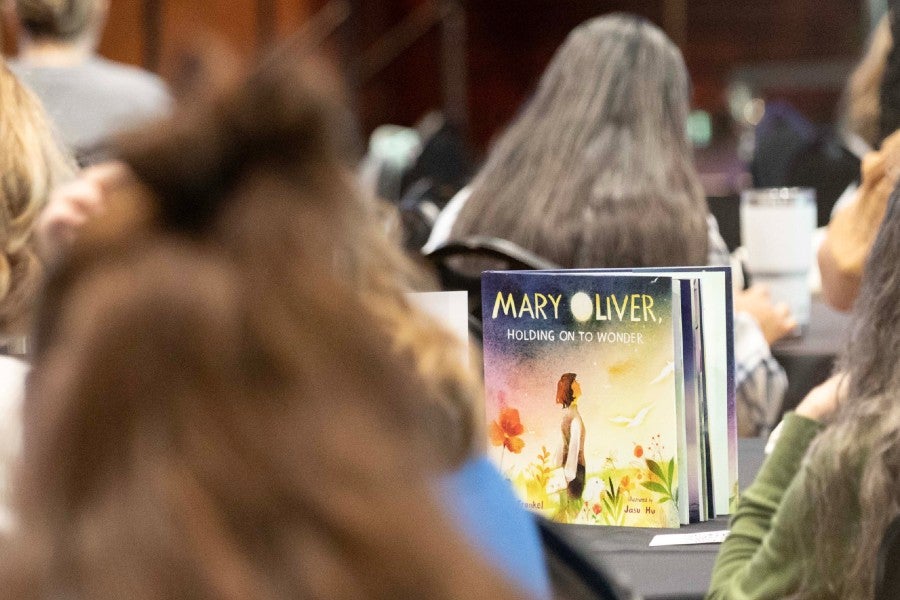
For nine years, Lipscomb’s College of Education (COE) has gathered teachers from throughout Middle Tennessee for a free on-campus professional development conference called Global Voices. True to its name, the event focuses on helping classroom teachers introduce students to cultures all over the world, especially through children’s books.
Close to 300 teachers attend annually to hear the latest research-based, practical methods to boost literacy and critical thinking; to learn new instructional practices and leadership methods; to pick from almost 700 carefully curated books to take back to their classrooms; and to build community among Middle Tennessee’s teaching corps.
This year was the first year, however, that the conference also featured research-backed recommendations from groups of undergraduate education students.
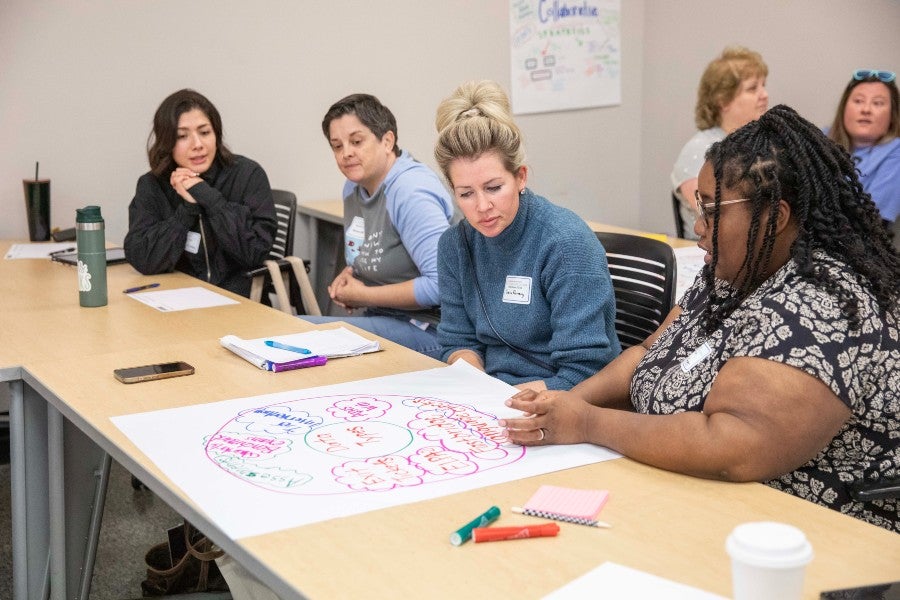
Four groups of 15 students, most of them headed to the classroom themselves upon graduation, spent the spring semester analyzing children’s books for various themes and learning benefits, so they could provide practical, easy-to-enact take-aways for teachers attending Global Voices.
Their inclusion is part of a college-wide goal to have education students engage in more research, said Dr. Jeanne Gilliam Fain, professor and coordinator of the Global Voices conference.
“Not only does involving our undergraduate teacher candidates in this research allow them to head into their jobs with a toolbox full of critical ways to analyze literature and teaching practice in authentic ways, but it also tends to make the information provided to teachers at Global Voices particularly useful on the ground,” said Fain. “A lot of professional development for teachers is about long-term changes, but this conference provides teachers with methods they can employ the very next day.”
The four student groups focused their work on key themes of the conference:
- How contemporary picture books can spark hope in K–5 classrooms;
- Using children’s literature to impact student’s mathematical proficiency;
- Strategies and curated book lists for building student flourishing and joyful learning communities grounded in brain research; and
- What do effective teachers do when information in a state-mandated curriculum is not engaging students.
Like every presenter at the conference, the student groups were held to strict scholarly standards, said Fain. Three of the four groups focused on themes within children’s literature.
“The books in these studies have been carefully critiqued and analyzed by committees across the United States,” said Fain, who brings her expertise to bear on selecting all the books recommended and given out in the conference’s popular book room as well as for two of the students’ studies. “We look at all the books for accuracy, authenticity and lack of stereotypes. We check the bibliographies and, of course, high-quality books need kid appeal.”
Fain is the outgoing chair and member of the International Literacy Association’s Notable Books in Global Society Committee, which selects an annual list of 25 outstanding trade books for enhancing student understanding of people and cultures throughout the world.
Another COE faculty member, Dr. Ally Hauptman, assistant dean of teacher education, will soon become the new chair of the National Council of Teachers of English’s Children’s Literature Assembly which identifies an annual Notable Books list. She also presented to teachers at Global Voices.
Each group of student researchers brought their best to the project, working to promote quality instruction among today’s teachers even before they step into their own classrooms.
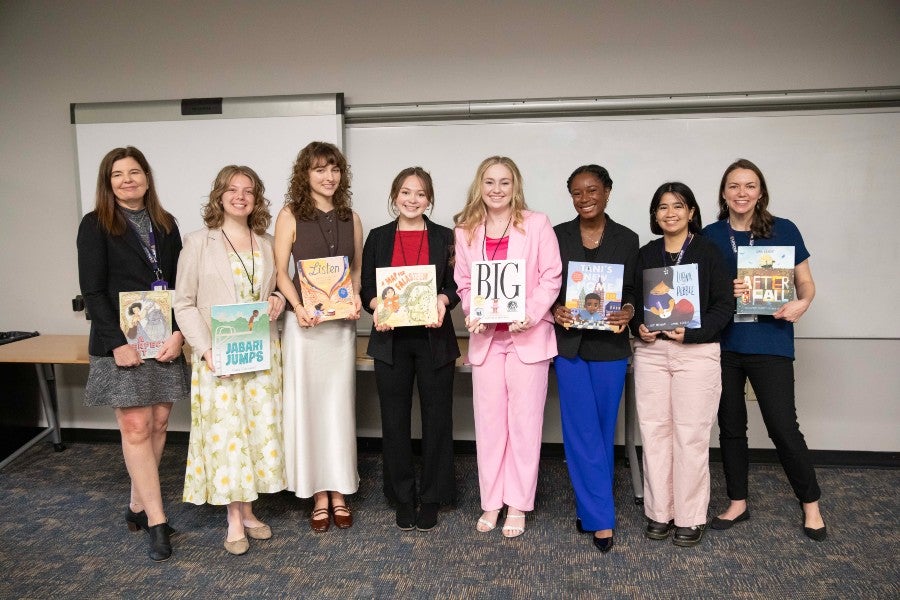
This student research group analyzed books that exemplified hope and recommended 14 books, for the Youth Encouragement Services library, to be used by at-risk youth.
Igniting Hope
Allison Croft (BA ’26), English education; Jillian Verver, English education; Ruby Bills, elementary education; Chandler Bell (BS ’26), elementary education; Kayla Hill, K-5 & special education; and Katerina Contreras, K-5 education.
Faculty Mentors: Fain and Dr. Sarah Duncan, professor
When Nashville’s Youth Encouragement Service (YES), came to the COE and asked for recommendations of books exemplifying hope to boost its library, the faculty and students were not only happy to take on the challenge but did so through a rigorous qualitative research model.
The final 14 selected books, winnowed down from 50, were given to YES, a Nashville-based after-school enrichment program for at-risk youth, and will be used with their participants.
This group conducted a textual analysis of K-5 children’s books published within the last eight years, exploring the theme of hope by identifying to what extent goal-based pathways and agency thinking were present in the characters’ journeys in the plots.
Hope Theory, developed by psychologist C.R. Snyder, sees hope as a cognitive process fueled by goal-based thinking, having clear, conceptualized goals to work towards; pathway thinking, creating strategies to achieve those goals, particularly when obstacles come up; and agency thinking, being able to sustain motivation and persevere towards an outcome.
The students also asked what resources of hope the characters used to navigate challenges as they work towards their goals. They used the resources defined by a previous study, cultural tools, social networks and relationships, to define the resources of hope they searched for in the books.
Within the top selected books, the students found various themes that fueled hope, including mentorship (i.e. Jabari Jumps and Tani’s Hew Home), healing of brokenness (i.e. After the Fall and How to Heal a Broken Wing), overcoming racial discrimination (i.e. Wat Takes his Shot and Nina), memories and artifacts, creating art or expression (i.e. Listen), acceptance of a difference and identity formation.
“We found that all of our other resources, they really tied into identity formation,” said Contreras, a junior, during the group’s second conference presentation this year at the Lipscomb Student Scholars Symposium. “Whether you had a mentor helping to influence the character or you had a memory that really helped push the character along, we found that at the end of these books, with all these factors coming together, these characters really had a big identity formation at the end.”
“Ultimately, we want to emphasize that resources of hope can come from many different places,” said Croft to end the presentation.
While the project’s topic helped equip these undergraduates for their future career, working on the project itself helped them understand how working in a school will function.
“I think I've learned a lot about collaboration,” said Verver, a junior. “Just hearing what all the group members brought forth and seeing what ideas each of us came up with, shows how important it is to have multiple voices coming alongside each other. I think I will take that with me into my teaching.”
“This project made me re-think and re-analyze my future classroom library and how I want that to look for children,” said Hill, a senior. “I want to make sure that every child and every story, and every background, ethnicity and religion, and all these different factors are all represented in my library.”
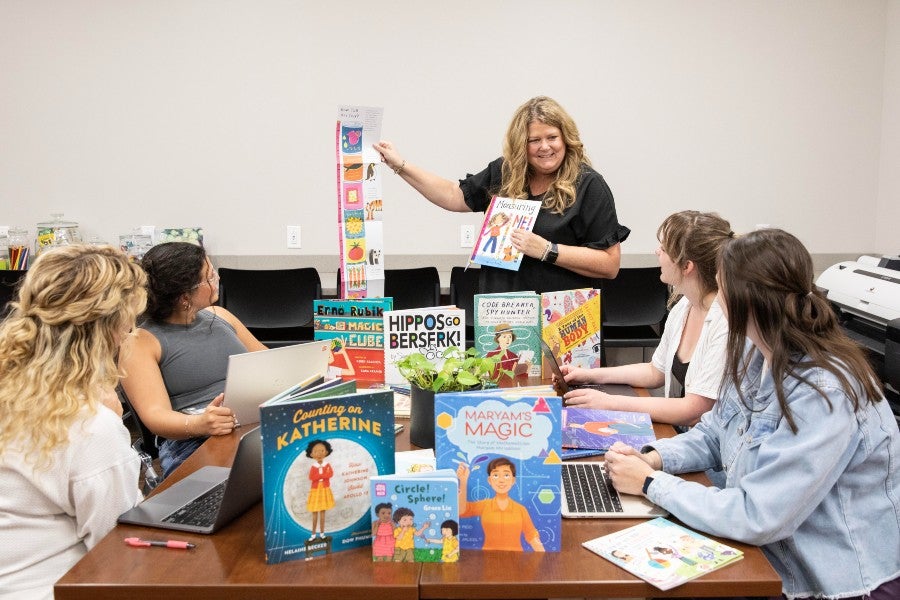
This student research group spent the school year working with undergraduate students to explore children’s literature’s impact on learning math.
A Mathematical Story
Emily Bass (BS ’26), K-5 & special education; Amada Lashmit-Pena (BS ’26), 6-12 mathematics; Victoria Modani (BS ’26), 6-12 mathematics; and Samantha Sanders (BS ’26), K-5, special education & English language learning
Faculty Mentor: Dr. Emily Medlock, professor
Thanks to a Scholarship of Teaching and Learning grant from Lipscomb’s Center for Teaching & Learning, Medlock spent the school year working with undergraduate students to explore children’s literature’s impact on learning math.
Using a selection of about 20 K-6 children's literature books purchased through the grant, Medlock and her team analyzed the books to see how well they support the Standards for Mathematical Practice, which are the processes and proficiencies included in the Tennessee Academic Standards and needed by K-12 students to be successful in mathematics.
“We wanted to understand how using children's literature can help enhance the standards for math practice by reading through the books, finding the common themes and then recommending the best books for teachers to use in the classroom,” said Medlock. “We also created a methodology for teachers to use on their own in selecting books.”
Using books is an effective way to foster a love for math, make connections to other subjects and to overcome students’ math anxiety, said Medlock, who is currently the president of the Tennessee Association of Mathematics Teacher Educators.
The team rated the books’ usefulness, ability to make connections and how easy they were to understand.
Bass signed on for the extracurricular research project after her teaching placement in a fifth-grade math class. “In my experience, it was helpful to students to see how math is actually used as well as about interesting careers in math,” said Bass.
Among her favorite books in the project were Code Breaker, Spy Hunter: How Elizebeth Friedman Changed the Course of Two World Wars, telling the story of pioneering cryptanalyst Elizebeth Smith Friedman and featuring hidden codes for kids to solve, and How Do You Turn Data Into Drawings?: A Statistics Book About Graphs and Data, that teaches students how to create graphs and charts by using statistics about the world “in fun ways that students would be interested in,” said Bass.
That’s important as the Tennessee Academic Standards now have greater emphasis on data literacy and statistics, said Medlock.
Lashmit-Pena analyzed the books through the lens of a secondary math education teacher and found she valued the books that showed characters using math during a significant developmental time in their lives.
“That would be good for high schoolers who may be currently going through hard times,” she said. Many of the books portrayed characters “learning to think logically and to think through steps, how they can be better humans and how they were passionate about making the world better through math.”
The students also presented a poster on their work at Lipscomb’s Student Scholars Symposium, and as part of her grant process, Medlock is analyzing how valuable the research project itself was for the undergraduates and hopes to present her conclusion at future academic conferences.
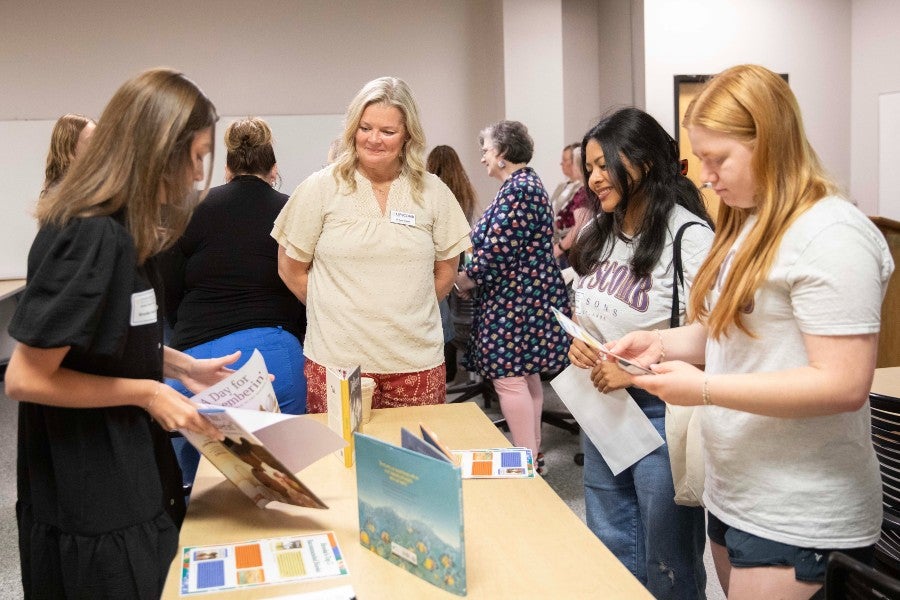
This student research group conducted a critical analysis of books looking for themes of joy, resilience and courage, characteristics that lead to student flourishing.
The Read Aloud Revolution
Kayla Hill, K-5 & special education; Lily Bray, K-5 & special education; Kayla Darden, early childhood education; Olivia Grace Martin, K-5 & special education; Brooke Autrey, K-5 & special education
Faculty Mentor: Dr. Suze Gilbert, associate professor
In keeping with the 2026 Global Voices theme, "Imagine, Ignite, Inspire," this group conducted a critical analysis of books looking for themes of joy, resilience and courage, characteristics that lead to student flourishing.
“Our goal was to help students view the curriculum as a tool that supports them as the instructional experts in their classrooms,” said Gilbert. At Global Voices, the students presented a curated book list intended to create joyful learning communities grounded in brain research, she said.
Each student reviewed three to seven books, and the group rated their chosen books based on how engaging they were, their structure, use of authentic voices and layered meaning as well as how well they linked to imagining, igniting or inspiring.
Among the books the group chose to recommend were My Home Is in My Backpack, Little Tree, How Do You Spell Unfair?, Spelling Bee and Lubna and Pebble.
“We looked for books where students can see themselves, in everyday situations,” said Bray, a junior, “books that show kids they can be who they want to be… In elementary education, you want to think of texts that will do more than just teach them to read.” Students also need to build emotional growth, she said.
Throughout the course of the project, Hill said she was reminded of how “big things can come in small packages, how much of life kids live and that kids really can change the world.”
The group’s session at the conference focused on methods of reading these books aloud, such as ways to encourage students to notice details or to wonder about questions, to achieve the goals of the Wit & Wisdom K–8 English language arts curriculum used in Nashville public schools.
Honoring Students’ Knowledge
Rachel Ferguson
Rachael Ferguson, interdisciplinary studies in education
Faculty Mentors: Dr. Michelle Hasty, associate professor, and Dr. Kristin Baese, associate professor
What do effective teachers do when information in a state-mandated curriculum is just not clicking with today’s schoolchildren?
How about a game of Grebe Grebe Goose, a riff on the well-known childhood game Duck Duck Goose?
That was one method used by a teacher highlighted in Ferguson’s qualitative study of how teachers can effectively teach what is called a scripted curriculum by tapping into students’ funds of knowledge, meaning their lived experience including cultural background, personal interests and family life, among other things.
When that teacher was required to teach first-graders the vocabulary word “grebe,” a freshwater diving bird that few students would have personal experience with, she overcame that knowledge barrier by inventing the game of Grebe Grebe Goose.
That was just one method that Ferguson observed through more than 70 hours of observation and participation in the teacher’s classroom. She also conducted qualitative interviews with the teacher and an extensive literature review of studies involving scripted curriculums.
She and her faculty mentors came up with three ways that teachers can keep students engaged and interested, even when the subject matter is well outside their lived experience.
The first, decentering the curriculum, involves teaching methods that center on the students, rather than the curriculum, such as when the teacher created a tooth-loss graph, where students marked each month of the semester on the horizontal X axis and how many of the students’ teeth were lost in that month on the vertical Y axis.
The second involved flipping the classroom power structure and allowing students to have a voice in decisions and operations within the class or encouraging them to think of themselves as young scientists or literary scholars. The third is to view the class as a larger ecosystem, recognizing that activities such as socializing with each other and sharing with each other are also ways to learn.
Ferguson presented a poster on her research at Lipscomb’s Student Scholars Symposium as well as her presentation at Global Voices.