The benefits of research: Recycled for good
Hundreds of doctoral students have brought the benefits of scholarly research to the region’s educational institutions, both as students and as graduates.
By Janel Shoun-Smith | 615-966-7078 |
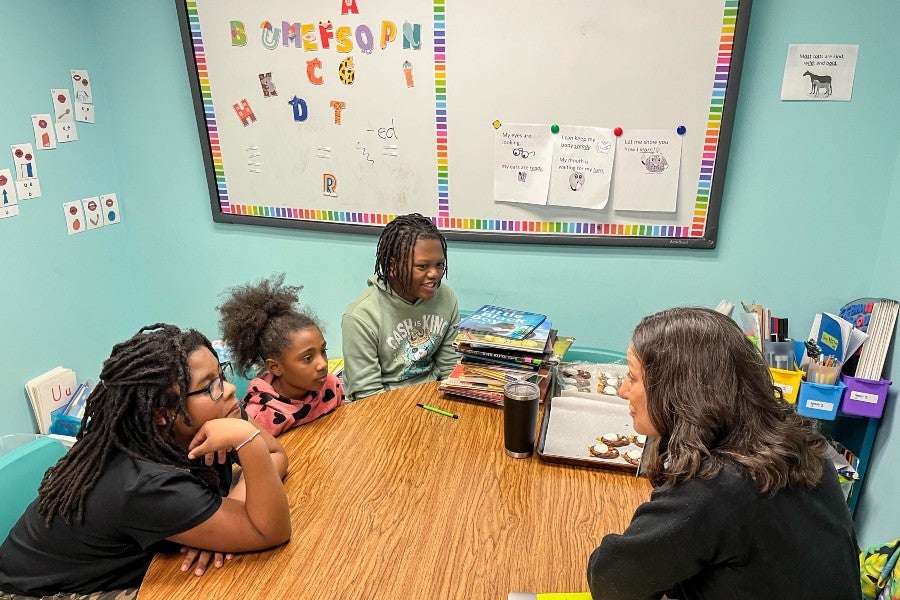
Photo courtesy of Preston Taylor Ministries
Each school year, a rotating cycle of scholarly service for the benefit of Nashville’s students and teachers plays out on the Lipscomb campus in the College of Education.
Each fall, more than 30 local educators begin a journey in Lipscomb’s Doctor of Education program that will have them analyzing various local and regional educational organizations, both big and small, in hopes of positively impacting their students.
And each May and December, these new Doctors of Education return to their educational roles (or new and elevated roles in some cases) as better equipped agents of change from within.
It’s a cycle of positive strategic change that has impacted hundreds of educational organizations in the state, nation and the world, including districts, schools, policy makers and other organizations on a variety of topics, said Autumn Hillis (MA ’16, Ed.D. ’19), assistant professor of education and doctoral research coordinator.
Brandon McGill
“Since its launch in 2010, Lipscomb University’s Ed.D. program has distinguished itself through a consistent mission to grow educational leaders as steadfast practitioners but also as engaged in research that directly benefits educational organizations in their local and extended communities,” she said. “Central to this model is a belief that doctoral research has the opportunity to serve and benefit the community.”
Topics covered over the 16 years of the program include talent and recruitment programs, instructional delivery models, early reading initiatives, and other district and state-wide initiatives, said Hillis, a product of the Ed.D. program herself.
Projects in the works in 2026 include examinations of STEM learning in informal settings, effective ACT preparation for multilingual learners, the impact of leadership development on student outcomes and the impact of Covid-19 closures on current chronic absenteeism.
When Preston Taylor Ministries (PTM), an after-school enrichment program originally born from the Preston Taylor Housing Development in North Nashville, began a new program allowing students to meet with social workers each week for social and emotional learning (SEL), they could see that the program was of great benefit to students, but they needed someone to scientifically document it, especially to enhance grant proposals, said Dwight Johnson, executive director of PTM.
“We just didn’t have the bandwidth. We could not have done this just by our own observations.” said Amber Jackson, PTM chief operation officer. The social work program “is a huge asset that makes us stand out compared to other programs, but we wanted to know definitively how effective it is. We could see their behavior changing, but we wanted some data behind it.”
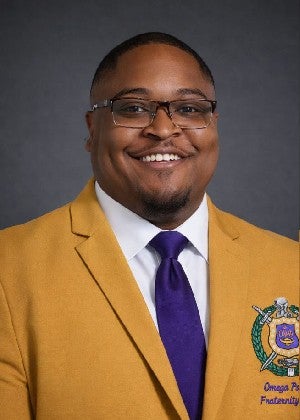
Brandon McGill (M.Ed. ’23, Ed.D. ’25), now assistant principal of instruction for Nashville’s LEAD Southeast High School, and LaToya Avent (M.Ed. ’23, Ed.D. ’25), dean of culture over grades 5-8 at Explore! Community School in Nashville, were assigned to the case.

LaToya Avent
The PTM program works alongside students who have experienced adverse childhood experiences (ACEs) such as trauma, neglect and violence and provides them time to meet one-on-one and in groups with social work interns earning their master’s degrees, described Avent. The social workers teach the students calming techniques (such as breathing exercises, countdowns or squeezing a stress ball) shown to decrease anxiety, withdrawal, defiance and aggressive behaviors, among other behavioral issues.
A preliminary literature review did not turn up much information on after-school programs conducting SEL in this way. “That gave us a confidence boost that not only is this something needed, but it also needs to be further explored,” said Johnson.
McGill and Avent conducted surveys and interviews with students, parents, the social work interns and the PTM site directors to determine the effectiveness of the program, Avent said. They found a significant positive benefit as students grew in emotional regulation and self management, self-reflection and accountability, social awareness and peer relationships, and various other criteria.
“They're actually taking these different strategies, and applying them to their life,” said Avent, “and that is a big thing, because when you think about the type of students that we interviewed who've had those adverse childhood experiences, this is like gold for them. They're taking it and they’re transferring it.”
“Those parents and guardians who were interviewed thought very highly of our program,” said Jackson. “They said the kids can self-regulate and put words to their emotions. Our program staff noticed that some students who used to just shut down, were now taking a pause and doing the techniques learned in their social work groups.”
Recommended areas for improvement were to use a tracking tool to ensure the social work interns use the provided curriculum consistently across sites, to boost student attendance and to create trainings for both staff and parents to maximize students’ use of the SEL techniques on a daily basis, said Avent.
“They put words to the impact now,” said Jackson, “and the information we have received is only going to enrich our program and make us better.”
Both Avent and McGill said they walked away from the experience with a new appreciation for SEL techniques, the best ways to teach them and their importance in the life of a student who has experienced ACEs.
“The most beneficial thing that I learned from this research was how to effectively implement SEL,” said McGill, who works with the guidance counselor and teachers at LEAD to implement their version of an SEL program called CREW. “I think everybody has their own way of doing it, but the research pointed to specific measures or how you have to train people to see the benefit… I have helped staff to understand why it is important and the rationale behind it.”
And this is just one of the many community-based projects Lipscomb’s Ed.D. students have made a positive impact on.
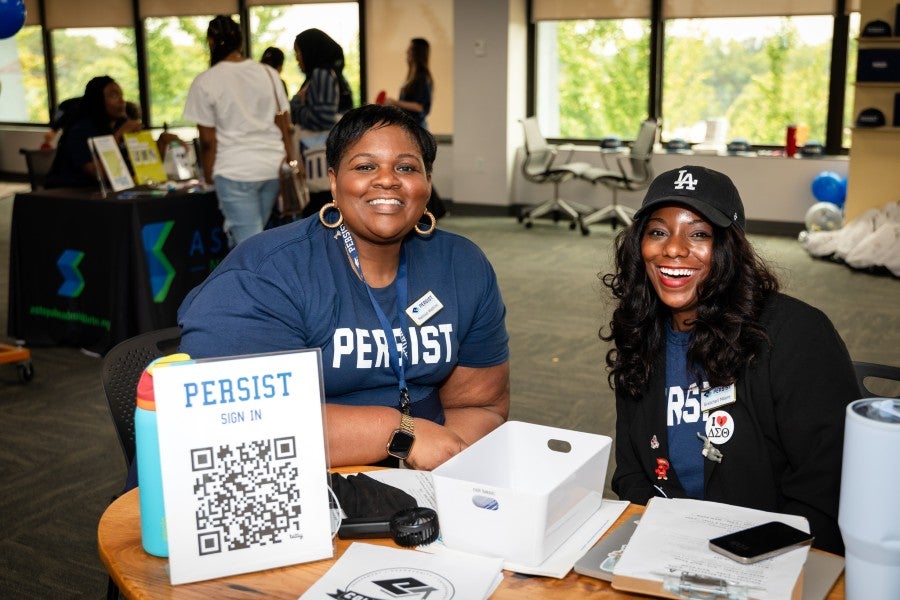
Persist Nashville, a college success coaching program for low-income students, first generation college students, tapped Lipscomb Ed.D. students to carry out research on how its programs lead to college persistence.
Persist Nashville, a college success coaching program for low-income students, first generation college students and students of color in Nashville, for example, could not have carried out the research on its own to fully understand how its programs lead to college persistence, said Jennifer HIll, executive director of the program established in 2019.
“We’re knee-deep doing the work and we want to make sure we are doing the specific work that is most beneficial to students. We are in a cycle of program improvement and redesign, incorporating what we have learned over the last few years,” said Hill in 2024. “As a small organization, it would be difficult to hire the kind of research capacity we were able to get through this partnership.”
Ed.D. students Andrew Holt (M.Ed. ’14, Ed.S. ’19, Ed.D. ’24), Abby Pitts (Ed.D. ’24) and Raquel Pointer (Ed.D. ’24) worked together to study the different factors that may impact college enrollment and persistence and how Persist Nashville is serving different students based on student ACT scores.
“Learning how to conduct various statistical analyses was helpful, but it was also helpful to just work (and sometimes struggle) through the research process,” said Pitts.
Persist’s three-pronged approach provides success coaching during the college admittance process, coaching while students are in their first year of college and coaching during students’ final years of college as they transition into a career. The Ed.D. students’ analysis found that the coaching during the final years of college, was the strongest predictor of success among the program participants, said HIll.
Pitts, who works to strengthen student retention as the executive director of student support at Cumberland University, said the Ed.D.’s collaborative approach to research is of benefit to all parties.
“The collaborative nature of this project was so important because so much of what we do as professionals is collaborative,” she said. “All three of us on this dissertation team come from very different backgrounds and experiences, but the process of working together produced a much better result than we ever would have generated on our own.”
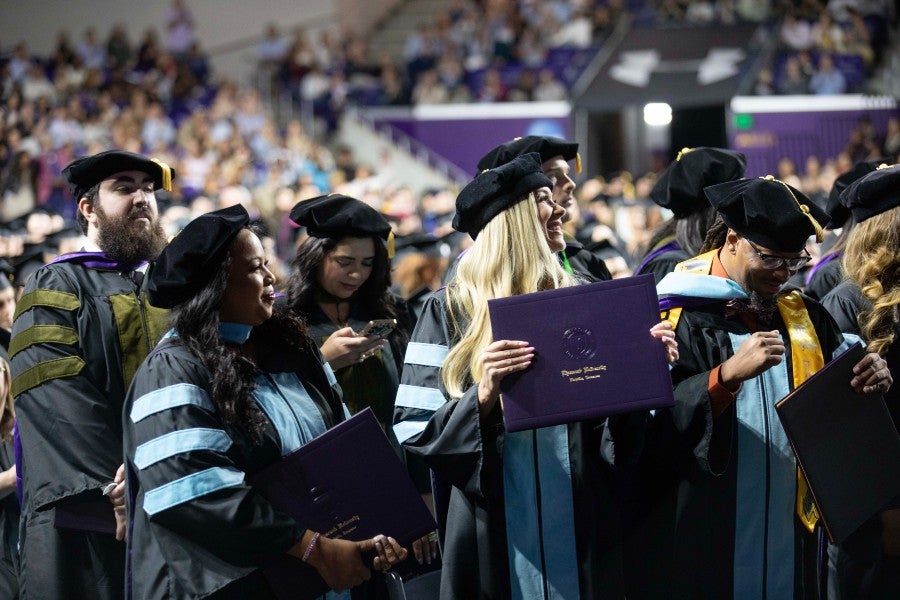
Ed.D. graduates at the May 2026 commencement ceremony. Each May and December, new Doctors of Education return to their educational roles (or new and elevated roles in some cases) as better equipped agents of change from within.
Lipscomb’s traditional dissertation research model involves Hillis seeking out research opportunities from local and regional organizations, developing contacts from those organizations, matching students into groups and assigning them their research topic.
This process was originally designed to overcome traditional choke points that often stall doctoral students or keep them from finishing their degree, and it has resulted in a database of more than a 100 organizations that have contracted with the program and a very positive completion rate over the life of the program.
While keeping that model available to students, this year the program offered two additional dissertation pathways: one where students can work independently to choose their topic and conduct the research and a second where students can create their own teams and choose their own research topic, said Hillis.
“Our Ed.D. students come with a variety of expertise and experiences, and we wanted to provide options for these students to design studies either independently or collaboratively that aligned with their areas of interest,” said Hillis. “While we have always been able to match students with compelling studies, we wanted to offer more choice.”
All three research approaches have been taken on by groups in the current cohort, to graduate in December, she said.
Bringing educational research to the community
By December 2026, the latest cohort of 37 students will have carried out 13 projects benefitting local educational organizations.
- STEM Learning in Informal Settings
- Effective ACT Preparation for Multilingual Learners
- Perceptions of School Order in a Middle School Setting
- Perceptions and Experiences of Instructional Coaching Structures and Their Funding
- The Experiences of Counselors and Early High School Graduates in Rural Districts
- The Impact of Leadership Development on Student Outcomes
- Instructional Coaching Systems in a Rural School District
- The Impact of Covid-19 Closures on Current Chronic Absenteeism
- Teachers' Perceptions of and Experiences within Professional Learning Communities
- Stakeholder Perceptions of a Positive Behavior Intervention Systems' Electronic Platform
- Experiences of Educators as They Engage in the STEM Designation of their School
- Perceptions of the Effectiveness of STEM Professional Development
- The Experience of High School Mentors in an After-School Program