
Program Overview
Do you want to serve those who have communication challenges? Explore the science behind speech, language and hearing through service learning, undergraduate research, clinical practice and community engagement in Lipscomb University’s Communication Sciences and Disorders program. Students will delve into innovative courses and interactive learning activities that physically engage students with an integrated faith perspective to inform their professional practice.
The need for speech-language pathology professionals nationwide is critical, including in rural areas of Middle Tennessee. This program—the only one of its kind in Nashville—imparts the knowledge and skills necessary to assess and treat disorders with dignity across the human lifespan.
Human communication is fundamental to effective health care, and this program has designed multiple pathways for students with diverse backgrounds and career goals:
- Traditional four-year undergrad: Our innovative, four-year program is taught from a liberal arts foundation, preparing students with the foundational skills and knowledge through active and experimental learning, coursework centering on the health care intersection of disability, culture and communication and early clinical exposure.
- Online leveling: These flexible courses offered fully online (asynchronous or synchronous), designed to fill prerequisite credit gaps for graduate programs, allow for career-changers or non-degree related students to meet specific graduate school requirements. This pathway lets you change your career without changing your degree.
With an undergraduate degree, students can go on to complete a master’s degree program in speech-language pathology or audiology, or enter the workforce as a speech-language pathology assistant.
Admission Requirements
Clinical Track
Applications for the clinical track should be submitted to the clinic director the semester prior to enrollment in CSD 3022 Clinical Methods I. Students desiring to participate in practicum assignments should be currently enrolled in CSD 4023 Pre-clinical and have evidence of the 25 observation hours.
Provisional admission to the CSD Clinical Track requires the following:
- Junior or senior in good standing
- Minimum 3.0 overall GPA
- Minimum 3.0 GPA in the major, with a grade of C or higher in all CSD courses
- CSD 1003 Introduction to CSD
- CSD 2003 Communication Development
- CSD 2013 Phonetics
- CSD 3002 Foundations of Neurodiversity
- BY 2434 Anatomy and Physiology I
- BY 2444 Anatomy and Physiology II
- CM 1024 Chemistry for Health Sciences
- MA 2183 Elementary Statistics
- Compile evidence (in the admission packet) of the skills necessary to develop and maintain adaptable interpersonal competencies essential for effective clinical practice, including professional communication, empathy and collaboration
- Completion of an admission packet
- Evidence of completion of a Basic Life Support (BLS) CPR course
- State (Tennessee), Federal and Child Abuse/Neglect Registry Background Checks with no disqualifying factors noted
- Upon receipt of the documentation, the clinical track admission committee will determine whether a student qualifies for full admission to the track. A minimum GPA of 3.0 must be maintained in CSD courses to maintain clinic track status.
in Best Healthcare Jobs (SLP)
A Transformative Learning Model
in US News & World Report's 100 Jobs (SLP)
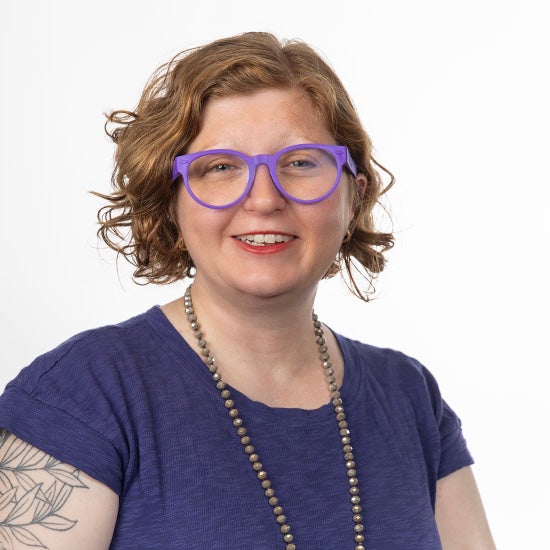
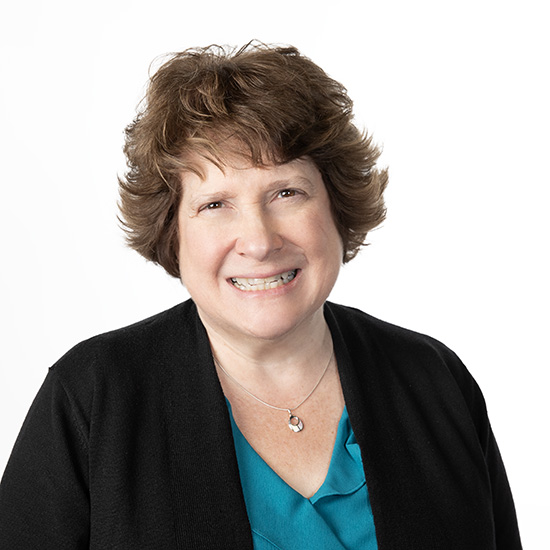
Our Faculty
29% projected growth rate (Speech Pathology)
Career Paths
Speech-Language Pathology Assistant (SPLA)
Speech language pathology assistants extend professional assistance to licensed speech language pathologists in conducting assessments, screenings and identifying communication disorders in patients.
Speech Pathologist (SLP)
From helping patients recover after neurological injuries to helping improve social communication skills, a speech pathologist’s role is crucial to articulating problems, implementing research and evidence-based treatment plans, and improving functional communication and swallowing abilities. (Must go on to complete graduate degree)
Audiologist
Audiologists make a life-changing impact by helping people connect to conversation, learning, and the world around them through expert care that prevents, identifies, and treats hearing and balance disorders across health care, education, and community settings.